

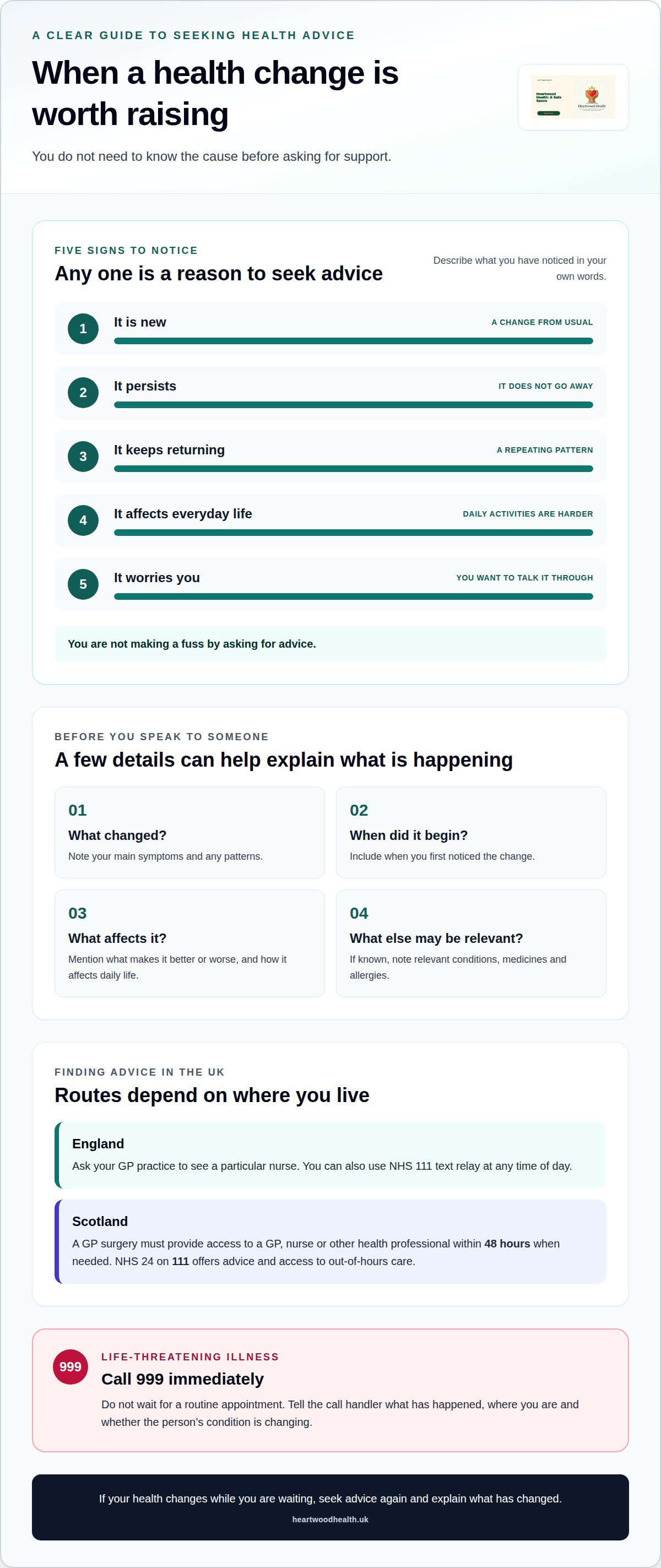
A change in your health deserves attention, even when you’re unsure what it means. Knowing when to speak to a nurse about a health change can help: seek advice if a symptom is new, persistent, keeps returning, affects everyday life or worries you. You don’t need to know its cause before asking for support.
It can be difficult to judge whether a change needs attention, especially if you’re anxious or waiting to speak to someone. Asking for advice isn’t making a fuss. You can explain what you’ve noticed in your own words.
This article explains how to seek health advice in the UK, what to do if symptoms worsen while you’re waiting, and how nurses and doctors can support you; for signs of a life-threatening illness, call 999 immediately, as the NHS advises.
Key Takeaways
- Health advice routes differ across the UK, so the right contact depends on where you live and the support you need.
- If your condition changes while you’re waiting, seek advice again and explain what has changed.
- Not sure what to ask? A nurse or doctor can help you talk through your concerns and possible next steps.
- Talking about future care can help you and the people close to you make plans that reflect your needs and wishes.
Access to a GP, nurse or other health professional
In England, ask your GP practice to see a particular nurse, or use NHS 111 text relay at any time of day. In Scotland, a GP surgery must provide access to a GP, nurse or other health professional within 48 hours when needed; NHS 24 on 111 offers advice and access to out-of-hours care.
Preparing information for a nurse
Prepare by noting what changed, when it began and how it affects you. Write down your main symptoms, any patterns, and what makes them better or worse. Include relevant conditions, medicines and allergies, if known. These details can help you explain your concerns, especially if talking feels difficult or you’re worried you’ll forget something.
Medication side effects and test results
Contact a nurse if a medicine causes new or worsening side effects, or if you’re unsure what a test result means. Explain the medicine’s name, when the effect started and how it affects daily activities. For results, have the message or report ready and describe any changes in your symptoms. Ask what the result means for your next steps and whom to contact if your symptoms continue.
Changes during pregnancy and after birth
During pregnancy or after birth, contact your midwife, maternity team or GP about a new, persistent or worsening health change. This could be a physical symptom that concerns you, or a change in mood, sleep or your ability to manage usual activities. Explain when it began and whether it’s getting worse. If you can’t reach your usual contact, use the relevant NHS service for advice.
Mental health crisis warning signs and contacts
A mental health crisis may involve feeling unable to stay safe, thoughts of self-harm, or distress that makes everyday tasks feel impossible. Tell someone you trust and contact your GP or an appropriate NHS service; in Scotland, NHS 24 can be reached on 111. If there are signs of a life-threatening illness, call 999 immediately, as the NHS advises. You deserve support, even if you’re unsure how to describe what’s happening.
What to do if symptoms worsen while waiting
If your health changes before an appointment, reassess how urgent the situation feels and seek advice again. The right route depends on the severity of your symptoms and where you live in the UK.
Urgent symptoms and routine appointments
A routine nurse appointment may suit a stable concern, but worsening symptoms may call for advice sooner. If you’re unsure, contact the service you’re waiting to hear from and explain what has changed, when it began and how it affects you. Ask whether your appointment is still appropriate or should be brought forward.
For urgent advice in Scotland, phone NHS 24 on 111. In England, people can use NHS 111 text relay at any time of day. Describe the change clearly, including any new symptoms, treatments or advice already received. A clinician can help direct you to appropriate care, including a specialist service when needed.
Don’t wait for a routine appointment if you feel your condition is becoming unsafe. Tell the person you speak to if you’re alone, unable to manage essential activities or finding it difficult to communicate. A trusted person can help explain what’s happening and discuss the next step.
Calling 999 or going to A&E
Call 999 immediately if you or someone with you shows signs of a life-threatening illness, as the NHS advises. Do not wait for a routine nurse appointment or a planned treatment review in that situation. Tell the call handler what has happened, where you are and whether the person’s condition is changing.
If you’re in Scotland and go to A&E, staff can assess your condition and decide what care you need. The service should admit you, send you home or transfer you to another hospital within 4 hours. If you’re unsure whether the situation is life-threatening, contact an urgent advice service rather than relying on a future appointment.
Note when your symptoms worsened and what advice you received. Share these details with the next health professional so they can understand what happened while you were waiting.
Health changes and life-shortening conditions
A serious or life-shortening illness can bring changes to symptoms, care needs and daily routines. In Scotland, future-care planning conversations can help people of all ages and their families manage changes in health or care. You can raise questions with a doctor or nurse at any time, including when a condition changes or you want to discuss what matters to you.
Planning ahead gives you space to describe your wishes before illness makes conversations harder. You might discuss who should be involved in decisions, what support helps you feel comfortable, and how your mental health is affected. These conversations aren’t only for someone near the end of life. They can support people and families as needs change.
A future-care plan may need updating as your needs or wishes change. You can revise it at any time, and regular reviews help keep it relevant. Record changes and share the updated copy with people involved in your care, as well as any friends or family you want to include. This helps those supporting you understand your current preferences.
In England and Wales, Scotland, and Northern Ireland, people can use advance-care-planning documents or toolkits specific to their region. A doctor or nurse can discuss how a plan fits your situation. You can also ask someone close to help put difficult questions or feelings into words, then discuss them together with the professional supporting your care.
When a serious illness leaves less time to discuss or review treatment options, planning ahead may make decisions less stressful for you and your family. You don’t need every answer before you begin. Start with one concern, such as a new symptom, a change in daily support or what you want others to understand about your care.
Support from nurses and doctors
A nurse or doctor can help you make sense of a health change, answer questions and discuss possible next steps. In Scotland, a nurse, doctor, care worker or familiar staff member may offer help and advice when someone’s health changes. If you’re unsure when to speak to a nurse about a health change, describe what feels different, how long it’s been happening and what you’re finding hardest.
Each conversation can help identify useful support. Describe how a symptom affects your sleep, eating, movement or work. A nurse may help you think through health and wellbeing questions, while a doctor can discuss medical concerns and appropriate care. If you already have a care team, share relevant updates with the person who knows your situation.
You can also ask for help understanding health information. If a social media post or online support group leaves you uncertain, discuss it with someone you trust, a nurse or a doctor. Bring the specific claim or question, and ask how it relates to your circumstances or whether it needs further attention.
Talking about a fear or worry may help you and others feel less alone. You could tell someone you trust, “I’m worried this change is getting worse,” and ask them to help explain it to a health professional. If you’re supporting a family member, ask what they’ve noticed and what they’d like help discussing. Where possible, let their preferences guide the conversation.
Nurses can use everyday interactions to support health and wellbeing, not only conversations focused on immediate health problems. Promoting health and preventing ill health is one of seven platforms in the Nursing and Midwifery Council’s future nurse standards, published in May 2018. For supportive conversations about wellbeing, explore Confidential wellbeing and health support and Nurse-led wellbeing support.
Heartwood Health: Confidential wellbeing and health support
Heartwood Health provides Confidential wellbeing and health support and Nurse-led wellbeing support if you want to talk through a health concern, understand wellbeing information or prepare questions for a healthcare professional. This support can sit alongside your usual care and help you clarify what you want to discuss.
This support is not medical diagnosis or treatment, emergency care, or prescribing medication. If symptoms suggest a life-threatening illness, call 999 immediately, as the NHS advises. For changes that need clinical assessment, contact the appropriate NHS service.
For Confidential wellbeing and health support and Nurse-led wellbeing support about your wellbeing or health concerns, contact Heartwood Health.
Take your next step with confidence
Knowing when to speak to a nurse about a health change can make it easier to raise a concern before it feels overwhelming. You don’t need a polished explanation or a clear idea of what should happen next. Start with what matters most to you, whether it’s a change in your energy, a worry about daily life or a question you’ve been holding back.
Heartwood Health’s nurses understand how helpful it can be to talk through concerns and prepare questions for your usual care team. Take time to work out what you’d like to discuss and what matters most to you.
If you’d like to talk, you’re welcome to contact Heartwood Health with any questions or suggestions. There’s no need to find the perfect words before reaching out.
Frequently Asked Questions
You Okay, Nurse?
“You okay, nurse?” is a simple way to check in with a nurse, not a substitute for a health assessment. If you’re the person being asked, you can answer honestly, even if you’re unsure how to explain things. Mention one change you’ve noticed and what support would help. If you’re asking someone else, listen without judgement and offer to help them contact a health professional.
What health changes should I speak to a nurse about in the UK?
Speak to a nurse about a change that’s unusual for you, keeps returning or makes everyday activities harder. You might notice new difficulty concentrating at work, a change in your sleep or discomfort that interrupts your routine. You don’t need to identify a cause first. Describe what’s different and how it affects you, including any concerns about your mental health.
How quickly should I speak to a nurse if a health condition is getting worse?
Seek advice promptly when a condition worsens, rather than simply waiting for a planned appointment. Tell the service you contact what has changed, when it began and whether it is continuing to worsen. Use the urgent advice route for your part of the UK if you need help deciding what care is appropriate. If you see signs of a life-threatening illness, call 999 immediately, as the NHS advises.


