

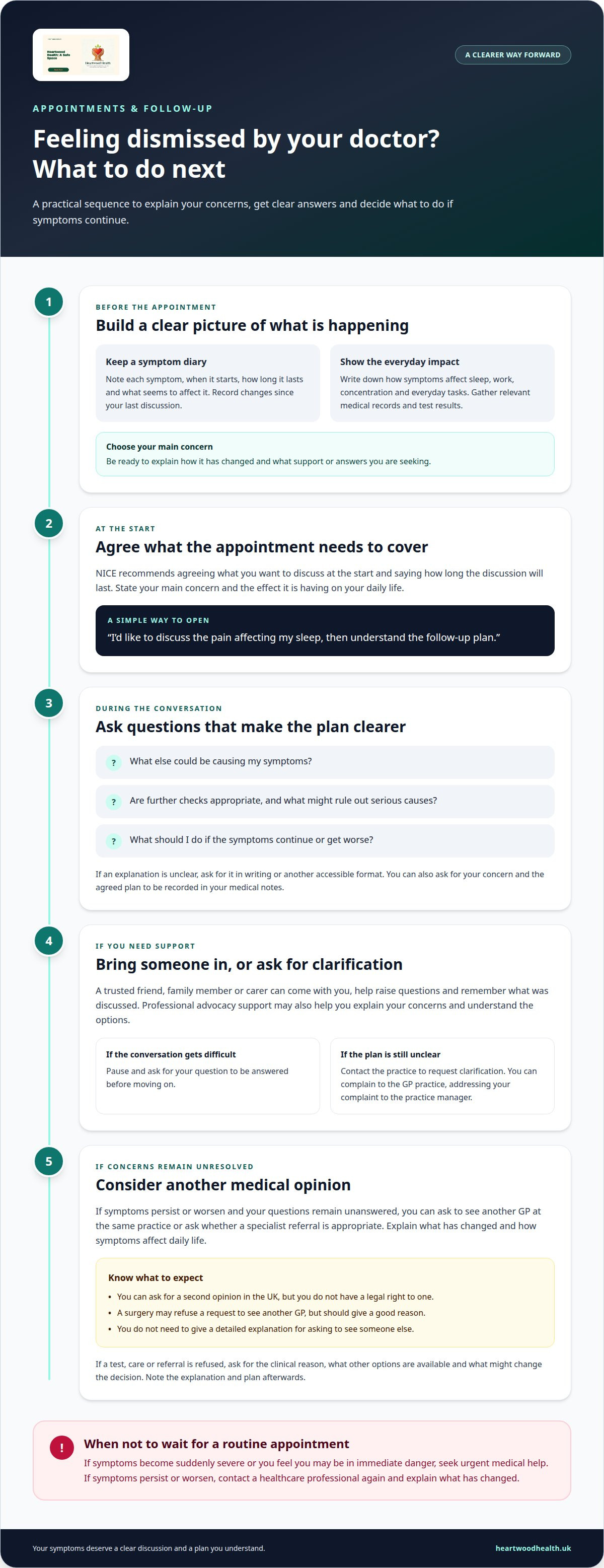
If you’re feeling dismissed by your doctor, what to do next is to explain your symptoms, how they affect daily life and what you still need answered. Ask what else could explain them and agree what to do if they continue. If your concerns remain unresolved, you can ask about another medical opinion. Being unheard can make you doubt your experience or hesitate to seek help again, but asking for a clearer explanation or another perspective is a practical way to keep your needs in the conversation.
This guide explains what people mean by medical gaslighting, how to prepare for an appointment and speak up during it, and which questions can help you get clear answers. It also covers when a second opinion may make sense and how repeated dismissal can affect your symptoms, emotional wellbeing and trust in healthcare.
Key Takeaways
- Track when symptoms occur, how long they last and how they affect daily life to make your concerns easier to explain.
- Ask what else could be causing your symptoms, what happens next and whether your concerns can be noted in your medical record.
- If symptoms persist or worsen and your concerns remain unanswered, you can ask to see a different GP or seek another medical opinion.
- Being dismissed can deepen self-doubt and make it harder to seek care, so notice how the experience affects your wellbeing and confidence.
1. What is medical gaslighting?
Medical gaslighting describes symptoms being denied or minimised, or attributed to emotional or psychological causes without enough attention to the person’s concerns. It can leave you feeling unheard and may delay investigation, care or a specialist referral. A doctor may suggest that stress contributes to pain, for example, but your physical symptoms still deserve careful discussion.
A symptom diary can help you explain what is happening at a GP appointment. Record each symptom, when it starts, how long it lasts and what seems to affect it. Note its impact on sleep, work, concentration and everyday tasks. Include appointment dates, advice given and changes since your last discussion. This record can help you describe an ongoing problem clearly.
Before the appointment, gather relevant medical records, test results and your symptom log. Choose the main concern you want addressed, then explain how it has changed and what support you are seeking. Ask what else could cause the symptoms, whether further checks are appropriate and what to do if they continue. You can ask for your concern to be recorded in your notes.
Some symptoms have overlapping causes. During perimenopause, depression can develop even if you have never experienced it before. Low mood, sleep problems and brain fog can also overlap with changes associated with the menopausal transition. Describe when each symptom began and how it affects you, rather than assuming one explanation accounts for everything.
To prepare for a GP appointment, bring your diary and records, describe the impact on daily life, and identify the main concern you want discussed. In England, Scotland, Wales and Northern Ireland, you can ask your surgery for an appointment with a different GP. To change surgery, contact the practice you want to join and ask how to register.
If symptoms become suddenly severe or you feel you may be in immediate danger, seek urgent medical help rather than waiting for a routine appointment. If symptoms persist or worsen, contact a healthcare professional again and explain what has changed since your last discussion.
2. Advocating for yourself during appointments
If you feel dismissed by your GP in the UK, calmly restate your main concern and explain what response or next step you need. Ask what else could be causing your symptoms, what might rule out serious causes and what to do if they persist. You can also ask for your concern to be recorded in your medical notes.
Agreeing an agenda can help keep an appointment focused. NICE recommends agreeing what you want to discuss at the start and saying how long the discussion will last. You might say, “I’d like to discuss the pain affecting my sleep, then understand the follow-up plan.” If an explanation feels unclear, ask for it in writing or another accessible format.
You don’t have to advocate alone. A trusted friend, family member or carer can come with you, help raise questions and remember what was discussed. You can also seek professional advocacy support. An advocate may help you explain your concerns, understand the options discussed and communicate with healthcare staff. Tell the practice what support would make the appointment easier for you.
If an insurer is involved in arranging or covering care, ask your doctor whether they can explain the clinical need or provide relevant medical information. Ask the insurer what information it needs, then discuss how to share it with your doctor. This may clarify the reason for a referral or care, without assuming the insurer will make a particular decision.
If a conversation becomes difficult, pause and ask for your question to be answered before moving on. If you leave without understanding the plan, contact the practice to request clarification. When concerns remain unresolved, you can complain directly to the GP practice, addressing your complaint to the practice manager. Describe what happened, what response you hoped for and what outcome you’re seeking. A clear request helps the practice understand what needs attention.
3. Seeking a second opinion
If you’re feeling dismissed by your doctor and wondering what to do, ask for a clear explanation of the assessment and options. A second opinion may be worth seeking if your questions remain unanswered, or symptoms persist or worsen without further investigation. You can ask to see another GP at the same practice, or ask whether a specialist referral is appropriate. Another medical opinion may help clarify the reason for proposed tests or care.
In the UK, you can ask for a second opinion, but you don’t have a legal right to one. If you request another GP at your practice, the surgery may refuse, but should give a good reason. You don’t need to give a detailed explanation for asking to see someone else. Focus on what remains unresolved, such as worsening pain or a diagnosis you don’t understand.
If your symptoms may need specialist care, ask your GP whether a referral is suitable. Explain what has changed, how symptoms affect daily life and why further assessment may help. Ask what the referral would explore and what the next step will be if it isn’t made. You can also ask what signs should prompt you to contact the practice again.
If a doctor refuses a test, care or referral, ask them to explain the clinical reason and discuss other options. Ask what might change their decision, what to do if symptoms continue, and whether they can record your concern and the plan in your notes. Remember the explanation, or write it down afterwards, so you can consider whether your concern has been addressed.
If you’re feeling dismissed by your doctor, deciding what to do next may mean arranging another appointment to discuss what remains unclear. Beforehand, note the questions you want answered and bring relevant records or results. This gives the next doctor useful context and helps you explain what you hope to understand, without needing to prove that your first doctor was wrong.
4. Psychological and healthcare consequences of dismissal
Being dismissed can affect more than your confidence in one appointment. If your concerns are repeatedly minimised, you may begin doubting your own account of pain, fatigue or other symptoms. That self-doubt can make it harder to explain changes clearly or return for answers. Feeling unsettled after a difficult conversation is a real response, not proof that your concerns are unimportant.
There can also be consequences for your care. When symptoms are labelled minor without enough investigation, diagnosis may be delayed and symptoms may worsen before you receive appropriate care. If you leave an appointment unsure what to do next, you may postpone follow-up or feel less able to ask about a referral. Write down the agreed plan and contact the practice if symptoms persist or change.
Repeated dismissal can affect mental health, too. Stress, shame and frustration may build when you have to explain the same concern at several appointments without feeling heard. Some people become wary of healthcare professionals or avoid seeking help, even when a new or worsening symptom needs attention. Notice whether fear of not being listened to is affecting when you book or attend appointments.
Try separating the emotional impact from the medical question. After an appointment, note what was discussed, what answer you received and what remains unclear. For example, record whether you understand why a test was not offered and what should prompt another review. This can help you prepare a focused follow-up, rather than feeling you must prove that your experience is valid.
If dismissal has left you carrying stress or uncertainty, Confidential wellbeing and health support can offer space to talk through its effect. Explore Confidential wellbeing and health support as a source of support alongside medical care.
Heartwood Health
Heartwood Health offers Confidential wellbeing and health support and Nurse-led wellbeing support if feeling dismissed has affected your confidence or emotional wellbeing. You can talk through the impact, organise your concerns and consider what support may help you feel steadier during future healthcare conversations. This support can sit alongside your medical care, but it is not medical diagnosis or treatment. If symptoms persist or worsen, continue speaking with your GP or another appropriate healthcare professional.
You don’t have to find the perfect words before asking for support. A conversation can give you space to explain what has been difficult and what would help next. To talk, contact Heartwood Health.
Take your next step at your own pace
Rebuilding confidence after a difficult healthcare experience can take time. You don’t need to resolve every concern in one conversation. Start by choosing support that feels manageable, whether that means returning to your GP with a clear request or talking through how the experience has affected you.
If you’re feeling dismissed by your doctor, what to do next may include finding a calm space to consider what would help you feel supported. Heartwood Health offers Confidential wellbeing and health support and Nurse-led wellbeing support, providing space to talk through your wellbeing concerns alongside your medical care. The nurse-led team can listen and help you consider your next steps without pressure.
You deserve to feel heard when discussing your health. If a supportive conversation would help, contact Heartwood Health and take the next step in a way that feels right for you.
Frequently Asked Questions
What is medical gaslighting?
Medical gaslighting is a term for a pattern in which a person’s account of symptoms is repeatedly discounted or explained away. It can be difficult to distinguish from a clinical disagreement or a doctor recommending watchful waiting. Focus on whether your concerns were explored, whether you understood the reasoning and whether you left knowing what changes should prompt follow-up.
Do I have a right to a second opinion?
You can ask for a second opinion in the UK, but you don’t have a legal right to one. You can request another GP at your practice or ask whether a specialist referral is suitable. If your request is declined, ask why and what care or follow-up is available instead. That explanation can help you decide what to do next.
How can you tell if a doctor is gaslighting you?
You can’t reliably know a clinician’s intentions from one appointment, and disagreement alone doesn’t establish gaslighting. Consider the pattern: are your symptoms repeatedly brushed aside without explanation, or are you left out of decisions about your care? Note what was said and how your questions were answered. This record can help you describe the concern clearly at a future appointment.
How do you approach a clinician whom you suspect is gaslighting you?
Keep the conversation centred on what you need clarified, rather than trying to prove the clinician’s intent. For example, say, “I’m concerned because this symptom is affecting my ability to sleep. Could you explain your assessment and what would prompt a review?” If speaking feels difficult, bring someone you trust or ask for the plan in writing.
What are the consequences?
Repeated dismissal can lead to self-doubt, distress and less trust in healthcare. You might put off another appointment, even when symptoms change, or struggle to explain concerns after a discouraging experience. Delayed investigation can also mean a health problem remains unrecognised for longer. If the experience is affecting your wellbeing, consider speaking with someone supportive while continuing to seek appropriate medical care.
What should you say to a doctor who dismisses your concerns?
Try making a direct, specific request: “I’m still concerned because this is affecting my daily activities. Could you explain what you think is causing it and what the next step is?” If you leave without a clear plan, ask what changes should lead you to seek another review. You can also request that your concern and the agreed plan are recorded in your notes.


