

Nurse-led health support can offer health education, a confidential space to discuss concerns and practical guidance on possible next steps. It can help you understand your options without turning every conversation into a medical appointment.
If you are considering nurse-led support, it is understandable to want a clear picture of what it involves and how it relates to wider healthcare resources, especially when deciding what feels appropriate for you or someone you care for.
This guide explains what nurse-led support can involve, how its purpose differs from medical diagnosis or treatment, and why education and informed conversations can sit alongside other forms of care. It will also help you recognise when wellbeing guidance may be a useful next step in your daily life.
Key Takeaways
- See how community and hospital services can work alongside support at home, and consider which resources may fit your situation.
- Understand how nurses can contribute to care planning, monitoring and transitions between healthcare settings.
- Learn what nurse-led wellbeing support may involve and how personal needs and location can shape the type of support.
- Explore how Heartwood Health offers confidential support, and what a first conversation can help you consider.
Using healthcare resources and community support
Community and hospital services meet different needs, from ongoing guidance to care during illness. The right option depends on the kind of support you need and where you receive care.
Planning time with a nurse
Time with a nurse can be arranged around a clear purpose, such as health education, wellbeing guidance or help understanding local services. Consider what you hope to discuss and whether you want to include a family member. A registered nurse can help you organise questions and consider next steps, but wellbeing support is not medical diagnosis or treatment.
Factors shaping support arrangements
The setting and your individual needs can affect how support is organised. Community services may offer ongoing guidance, while a hospital team may help coordinate care after discharge. The type of support and any other professionals involved can shape a suitable plan. An assessment can clarify priorities and identify appropriate support.
When considering private nursing support, look for a registered nurse whose experience fits the support offered. Ask how their role and responsibilities relate to your needs. Registration alone does not describe every service they provide.
To find support, you can start with your GP practice, community health services or hospital team. If you are leaving hospital, ask the team involved in your care how community support could fit into your next steps.
Good safeguards include clear explanations of the nurse’s role, the scope of support and how your information is handled. Share relevant needs and ask how concerns will be addressed. Nurse-led wellbeing support should complement clinical care, not replace it when you need medical assessment or treatment.
Nursing services and clinical interventions
A registered nurse may contribute to care planning by considering a person’s needs, routines and goals. For example, someone returning home after a hospital stay may need follow-up that fits their daily support. Their preferences can guide the plan, with family members involved where appropriate. Clear planning can also help smooth transitions between care settings.
In clinical settings, nursing care may include assessing, cleaning, dressing and monitoring wounds. A nurse can observe changes and share relevant concerns with the wider clinical team. Registered nurses may also administer medication or intravenous therapies when prescribed by a physician or advanced practice nurse. These interventions involve clinical judgement and sit within the nurse’s professional role.
Care can involve several professionals, including nurses, GPs, psychologists, social workers, psychiatrists, allied health professionals and support workers. When someone moves from hospital to home, coordination can clarify each person’s role in the plan. It can also help family members understand how they can support recovery and daily routines.
NHS-funded nursing care in England is a separate arrangement for eligible people living in a nursing home. According to the Department of Health and Social Care, it contributes to the nursing-care component provided in the home. Eligible people receive care arranged and funded by the NHS from registered nurses employed by that care home.
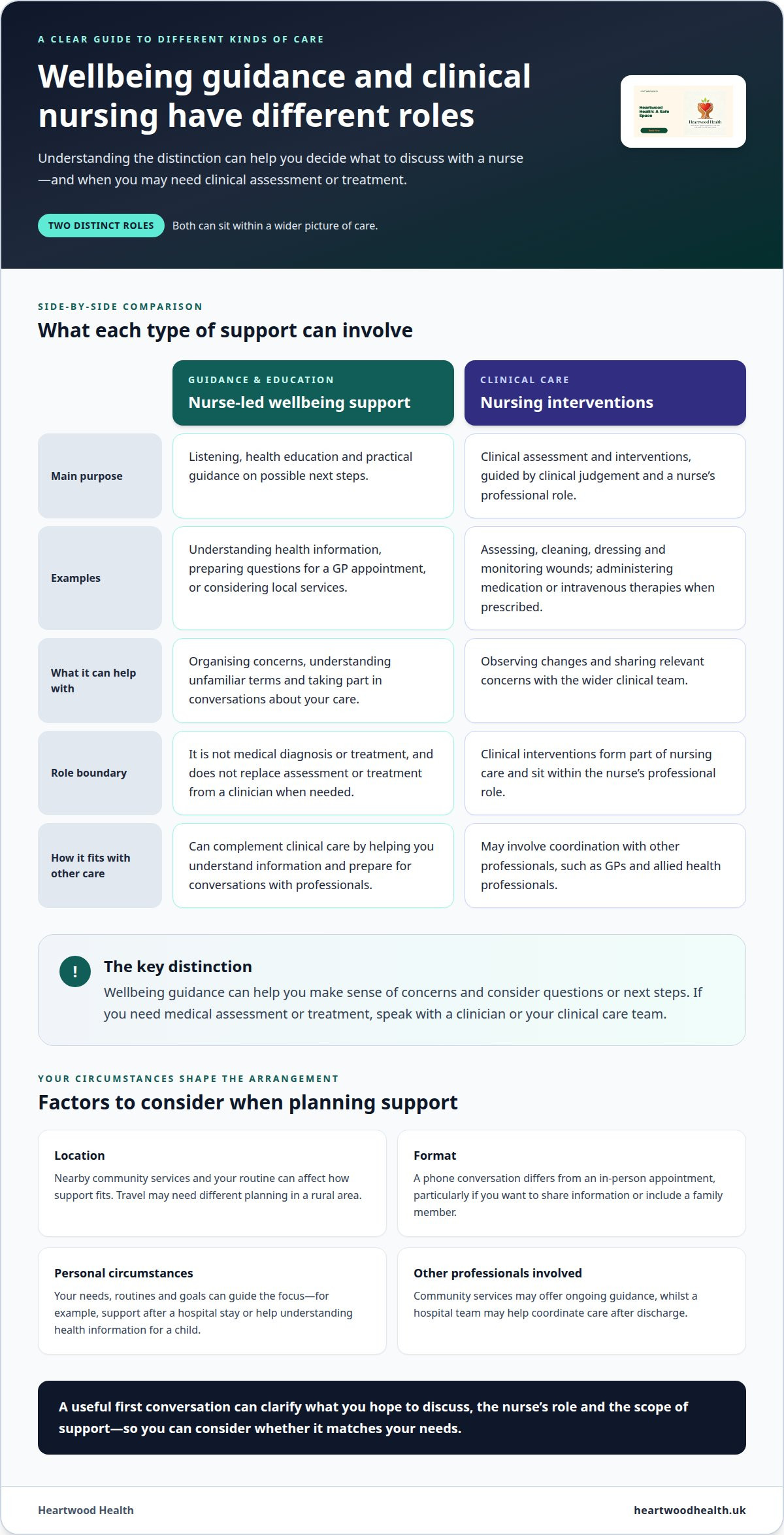
These examples show that “nurse-led” can describe different kinds of care. Health education and wellbeing guidance are different from clinical interventions, medical diagnosis or treatment. Understanding the purpose of support helps you identify which conversations suit a nurse and which need your clinical care team. It also helps you explain what kind of help you are seeking.
What does nurse-led health support involve?
Nurse-led health support offers a knowledgeable person to talk with about wellbeing and health concerns. A conversation may help you organise questions for a GP appointment, understand health information or consider possible next steps. Its focus is listening, education and guidance, not medical diagnosis or treatment.
Support can reflect your circumstances. For example, a parent caring for a child with special educational needs and disabilities may want help understanding health information or preparing to discuss concerns with relevant professionals. Someone experiencing a change in their wellbeing may value space to describe what has changed and consider practical options. You choose what feels useful to discuss.
Health education is another part of this support. A nurse may explain unfamiliar terms in everyday language, help you prepare questions for a clinical appointment and discuss general information about a health topic. This can make it easier to take part in conversations about your care. It does not replace assessment or treatment from a clinician when needed.
Confidential wellbeing and health support provides a private setting for sensitive conversations. You can raise concerns at your own pace, including worries that feel difficult to share with family or colleagues. For example, a discussion may help you prepare to speak with someone involved in your care, rather than make medical decisions for you.
“Per hour” does not describe one standard package of nurse-led support. Instead, consider what the conversation is intended to cover, such as health education, wellbeing guidance or help navigating services. This helps you understand the support’s role and whether it matches the questions you want to discuss.
What can shape the support someone needs?
Your location can affect which community services are nearby and how support fits your routine. For example, someone in a rural area may need to plan travel differently from someone near a community health centre. The format matters, too: a phone conversation differs from an in-person appointment, particularly if you want to share information or include a family member.
Your circumstances help define the focus. Someone returning home after a hospital stay may want help understanding health information and preparing questions for their GP. A parent caring for a child with special educational needs and disabilities may need guidance that takes account of family routines, school discussions and existing care arrangements.
Your preferences matter, too. You might want to speak privately, involve a carer or focus on one concern at a time. Start by identifying what you hope to get from the conversation: perhaps health education, help organising your concerns or guidance on services.
Health needs can change. A new concern may call for assessment by an appropriate clinical professional, while general wellbeing questions may suit an educational conversation. Nurse-led support can help you prepare to speak with your care team, but it does not provide medical diagnosis or treatment. Knowing the difference helps you choose appropriate support.
Think about the setting, the people you want involved and the questions you want to address. These details help shape a conversation around your circumstances, rather than a general checklist. For confidential nurse-led wellbeing and health support, you can talk through what support may suit you.
Heartwood Health: Confidential nurse-led wellbeing and health support
Heartwood Health offers confidential nurse-led wellbeing and health support when you want to talk through health concerns, understand information or consider practical next steps. A nurse-led conversation can help you organise what matters most, whether you are seeking support for yourself or helping a family member.
This support may be useful when a health question feels difficult to raise or you want help preparing to speak with a healthcare professional. It can include listening, health education and guidance on navigating services. It can sit alongside an EAP or other support, with a focus on wellbeing and health guidance.
Heartwood Health does not provide medical diagnosis or treatment, prescribe medication or replace urgent clinical care. If you need clinical assessment or treatment, speak with an appropriate healthcare professional. For general wellbeing questions, a nurse-led conversation can help clarify what you want to ask and which steps may feel manageable.
If you are unsure whether this kind of support fits your situation, a free 10-minute introductory call gives you space to explain what you are looking for and ask questions. There is no need to have everything worked out before you speak. You can share the concern that feels most important, and discuss whether confidential support is a suitable next step.
Heartwood Health’s approach is calm, confidential and centred on your needs. You can discuss the guidance you are looking for, explain what you hope to address and decide whether you would like to continue. To take the next step, contact Heartwood Health and share what support you are seeking.
Choose a next step that feels right for you
First, consider what you want from a conversation about nurse-led health support. You may want clearer health information, help putting questions into words or a confidential space to discuss a concern. Identifying your priority can help you decide whether this support suits you.
Heartwood Health provides confidential nurse-led wellbeing and health support focused on listening and practical guidance. A conversation can help you explore whether this support fits your needs. It is not medical diagnosis or treatment, so clinical concerns should be discussed with an appropriate healthcare professional.
You don’t need to have a perfect explanation ready. Start with what’s on your mind, and ask the questions that matter to you. Contact Heartwood Health to discuss your needs when you feel ready. A calm first conversation can help you find a way forward that feels manageable.
Frequently Asked Questions
What support options are available?
The available routes depend on the support you need and your circumstances. In England, NHS-funded nursing care contributes to nursing care in a nursing home, not private wellbeing conversations. Workplace support through an EAP may also be relevant, depending on the arrangement. These options serve different purposes, so first identify whether you need clinical nursing care, workplace wellbeing support or a confidential conversation about health concerns.
What does nurse-led health support include in the UK?
Nurse-led wellbeing support can include confidential conversations, health education and guidance to help you organise questions or understand general health information. For example, you might discuss preparing for a GP appointment or finding a clearer way to explain a concern. This is wellbeing guidance, not medical diagnosis or treatment. Clinical assessment and treatment remain the responsibility of an appropriate healthcare professional.
What does nurse-led health support cover?
Nurse-led health support can include confidential conversations, health education and guidance to help you organise questions or understand general health information. NHS-funded nursing care in England contributes to the nursing-care component provided in a nursing home. It does not describe private wellbeing support, which focuses on guidance and conversations about health concerns.
How does nurse-led health support differ from care assistants and other healthcare professionals?
Nurse-led health support, help from care assistants and appointments with other healthcare professionals each serve different purposes. A wellbeing conversation, help with daily routines and a clinical appointment are not the same. Consider whether you need health education, practical assistance or clinical assessment. Preparing questions about a health concern, for example, is different from arranging help with everyday tasks.


