

A wellbeing strategy doesn’t have to mean a large HR team or a long list of benefits. Workplace wellbeing support for small businesses can begin with finding out what staff need, then making practical support for physical, mental, financial and social wellbeing part of everyday working life.
When you’re balancing your team’s needs with the day-to-day demands of running a business, it can be hard to know where to start. Support needn’t look the same in every workplace. A useful approach reflects your people, working patterns and resources, while making wellbeing part of how the business operates.
This guide explains workplace wellbeing and how its four areas can inform a small business strategy. You’ll find practical ways to shape support around your team, assess whether an approach is suitable, and understand how confidential, nurse-led wellbeing support can complement existing workplace arrangements.
Key Takeaways
- Shape wellbeing support around your employees’ needs and your business’s budget, rather than choosing benefits simply because they are popular.
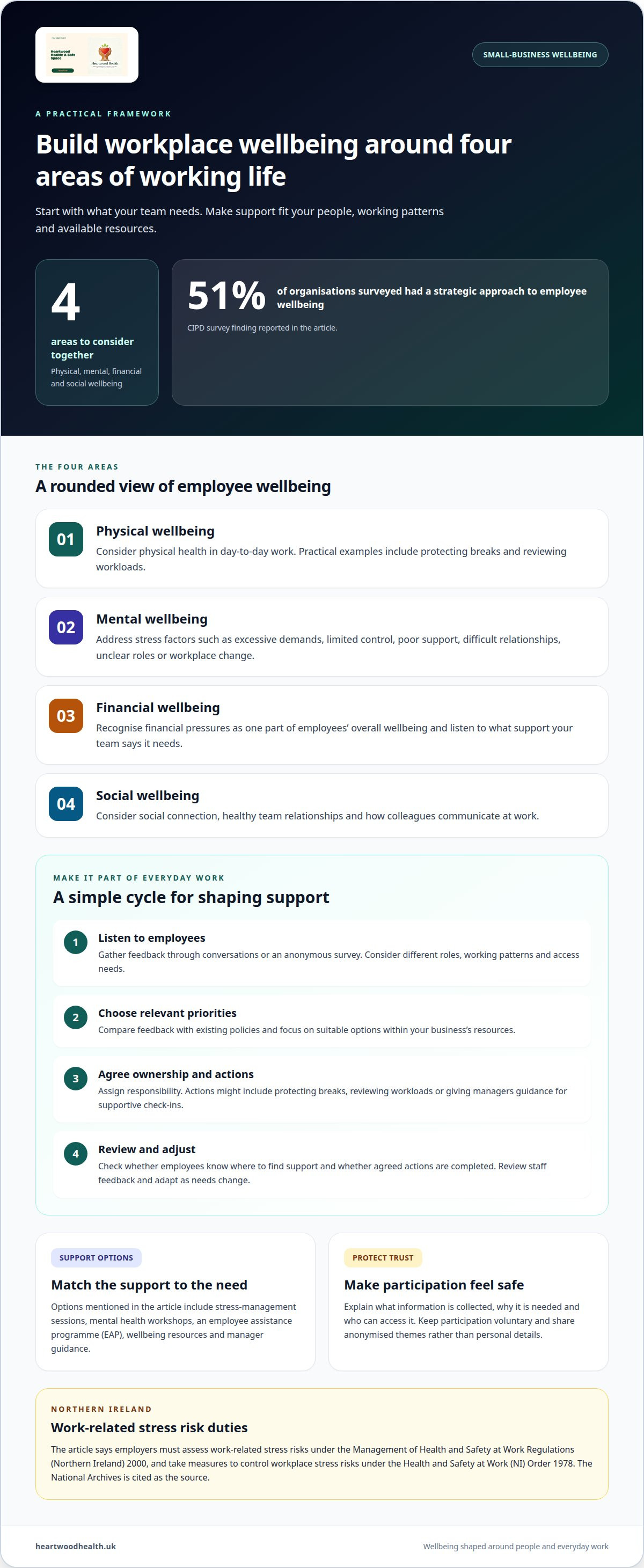
- Consider physical, mental, financial and social wellbeing together to build support that reflects different parts of working life.
- Embed wellbeing into everyday workplace culture through clear communication, supportive management and regular opportunities for employee feedback.
- In Northern Ireland, employers must assess work-related stress risks under the Management of Health and Safety at Work Regulations (Northern Ireland) 2000, according to The National Archives.
What is workplace wellbeing?
Workplace wellbeing is how a business supports employees’ health, happiness and ability to work. It can include mental health support, regular breaks, flexible working, healthy team relationships and practical benefits. Workplace wellbeing support for small businesses should reflect employees’ needs and available resources, rather than copy a larger organisation’s programme.
Support can improve job satisfaction, help employees feel heard and contribute to productivity. For example, a wellbeing professional can review existing benefits, listen to staff feedback and identify gaps. If employees struggle to attend appointments during standard working hours, flexible access to support may matter more than adding another general benefit. Regular reviews help you check that the programme remains relevant.
Employee-led planning makes support more inclusive. A professional can gather feedback through conversations or an anonymous survey, then consider different roles, working patterns and access needs. One employee may value practical guidance on managing stress; another may need clearer information about available support. The business can then prioritise suitable options within its budget, such as wellbeing resources, manager guidance or a focused support programme.
There is no single standard EAP arrangement for small UK businesses. Service scope and delivery vary, so consider what forms of support employees need and what a programme includes before deciding whether it fits.
A wellbeing professional can help you understand routes to support, such as NHS Talking Therapies, an employment adviser or occupational health. They can help clarify the concern, explain relevant options and identify an appropriate next step. Access depends on the service and individual circumstances.
Support can undermine trust if employees feel pressured to take part or worry that sensitive information will reach managers. Explain what information is collected, why it is needed and who can access it. Share anonymised themes rather than personal details, and make participation voluntary. Clear communication helps employees use support with greater confidence.
Physical, mental, financial and social wellbeing
Effective workplace support considers physical health, mental health, financial pressures and social connection together. For a small business, that might mean reviewing breaks, workloads, access to support and how colleagues communicate.
Mental health policies and workplace culture
A clear policy explains how employees can raise concerns, what managers should do and how private information is handled. It should also address practical stress factors, such as excessive demands, limited control, poor support, difficult relationships, unclear roles or workplace change. In Northern Ireland, employers must assess the risk of stress-related ill health arising from work activities under the Management of Health and Safety at Work Regulations (Northern Ireland) 2000, according to The National Archives. Employers must also take measures to control workplace stress risks under the Health and Safety at Work (NI) Order 1978, according to The National Archives.
Mental wellbeing support and interventions
Small businesses can choose support that suits their team, such as stress-management sessions, mental health workshops or an employee assistance programme (EAP). Training can help managers recognise signs of distress, respond with care and explain available support without trying to diagnose a condition. Funding for wellbeing initiatives depends on the scheme, location, sector and intended use. If exploring a business-support scheme, outline the need, proposed activity and how you plan to review it.
UK employers must provide a safe work environment under the Health and Safety at Work Act 1974, according to The National Archives. The Equality Act 2010 ensures fair treatment in UK workplaces, including for people with mental health conditions, according to The National Archives. These duties inform policies and decisions about support.
Mental health conversations at work
Regular, respectful conversations can help employees raise concerns before they affect work or wellbeing. A manager might ask what is making a task difficult, listen without judgement and discuss suitable adjustments or support. Explain the purpose, don’t press someone to share personal details, and agree what happens next. Leaders can assess workplace culture by reviewing feedback, absence patterns and whether agreed actions are followed up.
Embedding wellbeing into organisational culture and strategy
A wellbeing strategy works best when leaders connect it with everyday decisions, from workloads to staff communication. A wellbeing professional can help organisations turn feedback into clear priorities and review progress.
How wellbeing professionals can help embed wellbeing in organisational strategy
A professional can help leaders identify priorities, assign responsibility and agree how progress will be reviewed. They can compare employee feedback with existing policies, then recommend actions that fit the organisation’s working patterns. A CIPD survey found 51% of organisations surveyed had a strategic approach to employee wellbeing. Clear ownership helps make promoting wellbeing part of routine planning, rather than a one-off activity.
Practical steps for a small business might include protecting breaks, reviewing workloads or giving managers guidance for supportive check-ins. Set achievable measures, such as whether employees know where to find support and whether agreed actions are completed. Review these measures alongside staff feedback, then adjust the strategy as needs change.
Supportive culture
Culture is shaped by what leaders do consistently. Managers who listen, respond respectfully and explain decisions can help employees feel included. Four in five employees reported that an inclusive leader improved their performance and productivity. A wellbeing professional can help organisations translate that principle into everyday behaviours, such as inviting staff views in team meetings and following up on concerns.
There is also a business reason to address workplace conditions. That figure does not predict the effect of a particular programme, but it underlines why organisations should notice patterns such as avoidable pressure, missed breaks or unclear responsibilities. A supportive culture can help employees raise these issues early, so managers can consider practical changes and review their effect.
Wellbeing support for small and medium-sized businesses
Smaller organisations can make wellbeing practical by choosing initiatives that fit their workforce, working patterns and priorities. A programme needn’t start with a large benefits package. Begin by identifying a specific pressure, such as missed breaks, isolation among home workers or difficulty finding time for health appointments.
A wellbeing professional can help shape support around employee feedback and business needs. They can gather views, identify recurring themes and suggest options that fit available resources. For example, if staff raise workload concerns, review task planning and meeting schedules before adding a new benefit. This helps ensure actions address the issues employees actually describe.
Possible initiatives include:
- Protecting a shared lunch break by discouraging meetings during that time.
- Setting meeting-free periods so employees can focus on planned work.
- Offering flexible arrangements where roles and business needs allow.
- Sharing clear information about existing health and wellbeing support.
Choose actions employees can access in practice. A benefit that clashes with shift patterns may be less useful than support available at different times. A professional can help consider who each option reaches, how employees can access it and what adjustments may make participation easier. This is particularly relevant when a small team includes office-based, mobile and home workers.
Review the programme rather than letting it run on unchanged. A professional can collect employee feedback, make data-led adjustments and provide progress reports. Useful measures include whether staff know how to access support, whether planned actions are completed and what employees say has improved. These checks help leaders keep initiatives relevant as the workforce changes.
If you’re considering tailored wellbeing support for your team, talk through your team’s wellbeing needs as a possible next step.
Heartwood Health: Confidential nurse-led wellbeing & health support
Heartwood Health provides confidential, nurse-led wellbeing and health support for individuals and businesses. It can be a useful next step when you want a trusted space to discuss wellbeing concerns and consider appropriate support for your team.
This support can sit alongside an existing employee assistance programme, giving employees another way to discuss health and wellbeing. It is not medical diagnosis or treatment, so it is intended for wellbeing support rather than identifying or treating a medical condition.
For a small business, confidential support can help make it easier for employees to raise personal concerns without turning every conversation into a workplace discussion. You can explore whether this kind of support fits alongside your current wellbeing approach and what your team would find useful.
To discuss confidential wellbeing and health support for your business, contact Heartwood Health.
Take the next step at a pace that works for you
Choose one wellbeing priority for your business, then decide how you’ll know whether your response is helping. You might focus on making it easier to raise concerns, improving access to support or creating more space for breaks. Keep the first action practical, assign a clear owner and make time to hear how employees experience it.
Workplace wellbeing support for small businesses can evolve as your team’s needs change. You don’t need every answer before exploring what could help. A calm conversation can help you consider support that feels right for your organisation and its people.
If you’d like to explore a next step, contact Heartwood Health. A thoughtful start can make it easier to build support your team can feel comfortable using.
Frequently asked questions
What workplace wellbeing support is available to small businesses in the UK?
Small businesses can consider employee assistance programmes (EAPs), occupational health input, wellbeing apps and confidential support from a health professional. Each option serves different needs: an EAP can provide a route to employee support, while occupational health focuses on health in relation to work. Practical changes, such as flexible arrangements or clearer ways to raise concerns, may also help.
What wellbeing support can small businesses access through the NHS, charities, or government?
Support may be available through NHS services, charities or government programmes. Clarify what an option provides and who can access it before relying on it. A wellbeing professional can help you identify your team’s needs and consider suitable routes to support.
How can a wellbeing professional help a small business create a practical workplace wellbeing plan?
A wellbeing professional can help turn a concern into a clear plan. Record the issue, how it was identified, the response, milestones, employee feedback and a review date. For example, if staff report pressure around deadlines, assign responsibility for reviewing workloads and set a date to discuss whether changes helped. This gives your business a way to track actions and adjust them.
How can a wellbeing professional support a small business when an employee is experiencing mental health difficulties?
A wellbeing professional can offer employees a confidential space to discuss wellbeing concerns and help the business consider appropriate support. They can help a manager plan a sensitive conversation, explore work-related factors and consider practical adjustments, such as changing task priorities. Heartwood Health provides confidential, nurse-led wellbeing and health support. It does not provide medical diagnosis or treatment. Always consult your GP or health provider about medical concerns.
How can small businesses choose between employee assistance programmes, wellbeing apps, and occupational health services?
Start with the need you want to meet. An EAP can provide a route to employee assistance, an app offers digital wellbeing resources, and occupational health focuses on health related to work. Consider the concerns employees raise, how they prefer to access support and whether managers need guidance on workplace adjustments. A professional can help you weigh these factors and avoid choosing a tool that misses the underlying need.


