

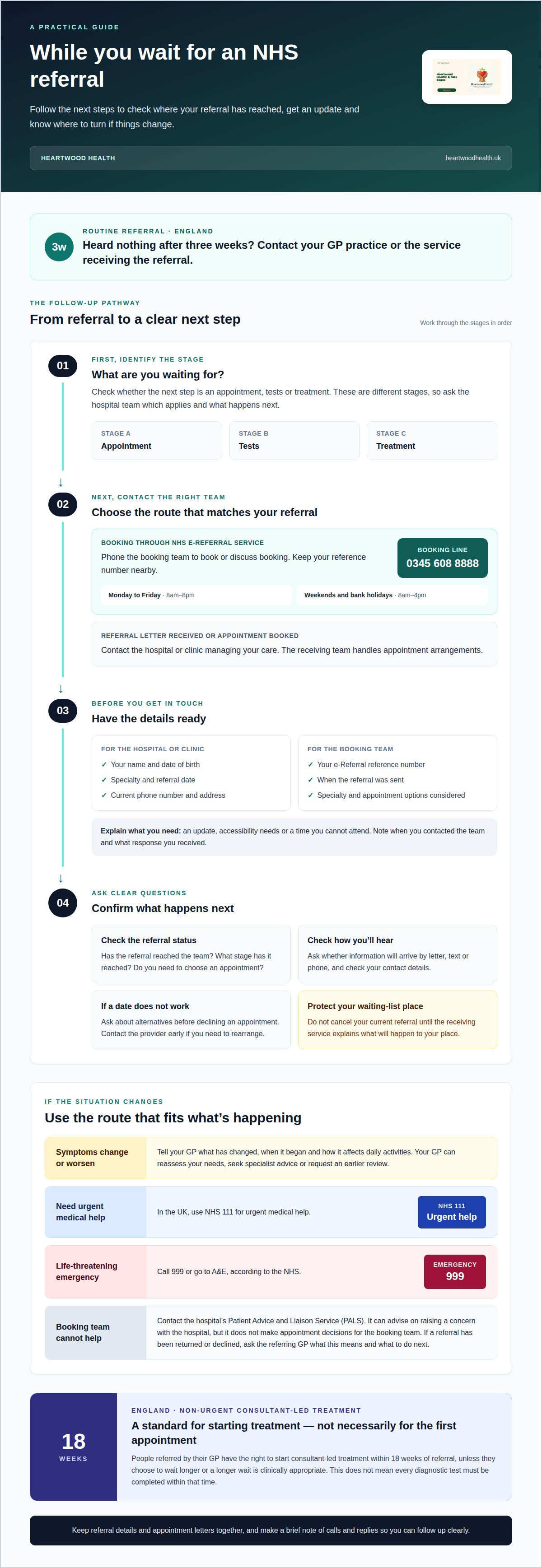
If you’re wondering what to do while waiting for an NHS referral, contact the GP practice that referred you or the hospital or service handling your appointment for an update. In England, it’s reasonable to ask after three weeks if you’ve heard nothing about a routine referral.
Waiting without clear information can feel unsettling, especially if your symptoms change or you’re unsure whether your referral has reached the right team. For urgent medical help in the UK, call NHS 111; for a life-threatening emergency, call 999 or go to A&E, according to the NHS.
This guide explains what an NHS waiting list means, who to contact for referral and appointment updates, and what support may be available while you wait. It also covers what to do if your symptoms change, your referral seems delayed, or you need help understanding what happens next.
Key Takeaways
- If you’ve heard nothing about a routine referral after three weeks, contact your GP practice or the service receiving the referral.
- For booking updates, contact the hospital or clinic managing your referral; PALS may help if the booking team can’t.
- NHS 111 is for urgent medical help. For a life-threatening emergency, call 999 or go to A&E.
- In England, the 18-week standard for non-urgent consultant-led treatment has exceptions. Find out what applies to your referral and what support is available while you wait.
Contacting booking teams and PALS
If you are waiting for an appointment booked through the NHS e-Referral Service, phone 0345 608 8888 to book or discuss booking. The line is open from 8am to 8pm Monday to Friday, and from 8am to 4pm on weekends and bank holidays. Keep your reference number nearby so the booking team can locate your referral.
Your NHS e-Referral Service reference and login can also help you manage an appointment online. Before calling, note when your GP or another health professional sent the referral, which specialty it concerns, and any appointment options you have considered. Explain whether you need an update, have accessibility needs, or cannot attend a proposed time. These details help staff understand what response is appropriate.
- Ask whether the referral has reached the booking team and whether you need to choose an appointment.
- Check how the service will send appointment information, and confirm your contact details if needed.
- If a slot does not work, ask about alternatives before declining it.
If the booking team cannot help or does not respond, contact the hospital’s Patient Advice and Liaison Service (PALS). Explain when you contacted the booking team, what update you need, and how the delay is affecting you. PALS can advise on raising a concern with the hospital, but it does not make appointment decisions for the booking team. If your referral has been returned or declined, ask the referring GP what this means and what to do next.
For a life-threatening emergency, call 999 or go to A&E, according to the NHS.
Contacting the hospital or clinic managing the referral
If you’re deciding what to do while waiting for an NHS referral, contact the hospital or clinic managing your care once you’ve received a referral letter or booked an appointment. The GP’s referral service starts the process, but the receiving team handles appointment arrangements. Have your name, date of birth, specialty and referral date ready so staff can find your record and explain the next step.
For a routine referral in England, it’s reasonable to contact your GP or receiving service if there’s been no response after 3 weeks. If you already have an appointment letter, speak directly to the service rather than asking your GP to relay a booking update. Ask whether your referral has arrived, what stage it has reached, and how you’ll hear about the next step towards treatment through the NHS.
A useful step while waiting for an NHS referral is to clarify what you need to do next:
- Confirm the hospital has your current phone number and address.
- Ask whether appointment offers arrive by letter, text or phone.
- If a date doesn’t work, ask about an alternative before declining it.
Don’t cancel your current referral until the receiving service explains what will happen to your waiting-list place. This is important if you’re considering another hospital or route. Changing or missing an NHS appointment can, in some cases, reset the referral-to-treatment clock. Contact the provider as early as possible if you need to rearrange, so staff can explain how this may affect your appointment and waiting place.
If your symptoms have changed, tell your GP what is different and when it began. They can reassess your needs, seek specialist advice or request an earlier review. Keep a brief note of calls and responses so you can follow up clearly if you haven’t heard back.
Information and support while waiting
While waiting for an NHS referral, keep a clear record of your symptoms and know where to seek help if they change. The right next step depends on how you feel and what support you need.
Responding to worsening symptoms
Worsening symptoms means a noticeable change in how you feel before your specialist appointment. Contact your GP and describe what has changed, when it began, and how it affects daily activities. For example, explain if pain now makes walking difficult or symptoms happen more often. Your GP can reassess your needs and consider asking a consultant team for advice. This information helps them understand what has changed since the referral.
Contacting a GP or seeking urgent help
Contact your GP again if symptoms worsen, new symptoms appear, or your current care plan no longer feels appropriate. For urgent medical help in the UK, NHS 111 is the service to use, according to the NHS. Describe your symptoms and any changes, then follow the advice you receive. If you’re uncertain what to do, NHS 111 can help you decide on a suitable next step.
Practical support can also help while you wait for an NHS referral. If travel or another need could make attending difficult, explain your circumstances to your GP practice or hospital team and ask what help may apply. For example, mention mobility needs or difficulties arranging transport. They can direct you to information relevant to your situation.
You can ask your GP for copies of letters or emails sent about your care. A referral may take time to appear in the NHS App, and its absence doesn’t necessarily mean it has been lost. Keep your appointment letters and referral details together. This gives you a useful record when discussing your care with a GP, specialist or clinic.
What can I do if my NHS referral is taking too long?
First, find out whether you’re waiting for an appointment, tests or treatment. These are different stages, so ask the hospital team which applies and what happens next. Keep the referral date, service name and recent updates together. This gives you clear details when following up with the NHS team managing your care.
In England, people referred by their GP for a non-urgent condition have the right to start consultant-led treatment within 18 weeks of referral, unless they choose to wait longer or a longer wait is clinically appropriate, according to the Department of Health and Social Care. This concerns starting treatment, not necessarily having an initial appointment or completing every diagnostic test within that period.
If you’re approaching or have passed the 18-week point, contact the hospital’s waiting-list team and ask what stage your referral has reached. You can also ask whether they hold a cancellation list and whether you can accept a short-notice appointment. Tell them about any limits on when you can attend, so they can explain suitable options.
- Write down the date and outcome of each call.
- Ask who to contact if the expected next step doesn’t happen.
- Keep your contact details current with the hospital.
If your symptoms have changed, tell your GP what is different and how it affects you. A GP can reassess the change, seek advice from a specialist team or request an earlier review. Urgent and suspected-cancer referrals follow two-week-wait pathways, so tell your GP promptly if you’re concerned about worsening symptoms. If a referral has been returned or declined, ask the referring GP to explain the decision and next steps.
Heartwood Health
Heartwood Health offers confidential wellbeing and health support, delivered as nurse-led wellbeing support, while you wait for NHS care. It may help if uncertainty, ongoing symptoms or the practical demands of waiting are affecting your wellbeing. You can talk through your concerns and consider what support could help you feel more prepared for conversations about your health.
This support sits alongside NHS care. It doesn’t replace your GP, hospital team or referral, and it isn’t for medical diagnosis or treatment. Always consult your GP or health provider about your health. If your symptoms change, contact your GP; for urgent medical help, use NHS 111. Your NHS team remains the right contact for referral updates and clinical decisions.
You may find it useful to organise questions for your next appointment or discuss how waiting is affecting everyday life. Support can also help you think about what you want to share with your GP or specialist. You remain in control of what you discuss and which next steps feel suitable for you.
If you’re unsure whether this support could help, Heartwood Health offers a free 10-minute introductory call. It gives you space to ask questions and explain what you’re looking for, without pressure to continue. For referral progress, appointment arrangements or changes in symptoms, keep speaking with the relevant NHS team. For wellbeing support alongside that care, you’re welcome to contact Heartwood Health and ask about the support available.
Frequently Asked Questions
Does the 18-week clock start at the GP referral or hospital acceptance?
In England, the consultant-led waiting-time clock generally starts when the receiving service gets your referral, not when your GP writes it. If you book your first appointment through the NHS e-Referral Service, the clock may start when that appointment is booked. This differs from the hospital formally accepting your referral, so ask which start date applies to your pathway if you need to understand your waiting-time position.
How long should an NHS referral take to be acknowledged?
Most non-urgent referrals sent through the NHS e-Referral Service are acknowledged within 1-2 weeks. An acknowledgement confirms receipt, but it isn’t the same as an appointment offer or a confirmed treatment date. Check the message for what happens next and whether you need to choose an appointment. If the communication gives you a deadline or action, follow those instructions so the booking process can continue.
How can I prepare for an NHS specialist appointment and manage symptoms in the meantime?
For the appointment, check the letter for the location, arrival instructions and any preparation requested by the clinic. Contact the hospital beforehand if you need an interpreter, accessible arrangements or help understanding the appointment format. You could also write down the main questions you want answered, such as what the consultation will cover and what decisions may follow. This helps you make good use of your time with the specialist.
Can I choose a different NHS hospital or provider to reduce waiting time?
In England, you may have the right to choose a hospital for your first outpatient appointment, and patients can travel anywhere in England for NHS treatment under patient choice. Before cancelling your current referral, ask the receiving service what would happen to your waiting-list place. A different provider or route is not guaranteed to reduce the wait.
Can I have a private consultation while waiting for an NHS referral, and will it affect NHS care?
You can have a private GP consultation, but it does not transfer, replace or speed up your existing NHS referral. A private specialist’s recommendation does not automatically put you on an NHS waiting list or guarantee the same NHS investigation or treatment.


