

Remote nurse support can be more than a video appointment: it can offer patients clear health education and practical self-care guidance, while helping care teams keep conversations focused. Hospitals, clinics and home health agencies may hire remote nurses, and virtual nurse coaching can make information easier to understand through manageable explanations and teach-back, where patients describe what they’ve learnt in their own words. If you’re considering this kind of support, it helps to know what coaching can cover and how a nurse can adapt communication to a person’s needs, including their language, reading ability, hearing, vision and support system. This guide explains who hires remote nurses, what virtual coaching may involve for patients and care teams, and how Confidential wellbeing and health support and Nurse-led wellbeing support can fit when you’re looking for guidance rather than medical diagnosis or treatment.
Key Takeaways
- Remote nurses may work for hospitals, clinics and home health agencies, adapting conversations to a patient’s surroundings and communication needs.
- Virtual coaching can make health information easier to follow through clear explanations, manageable steps and teach-back.
- Private remote nursing can include virtual appointments, health education, self-care guidance and triage, depending on the service.
- Response times and availability depend on the service; understand its scope and whether it suits your needs before relying on it.
Who hires remote nurses?
Hospitals, clinics and home health agencies may hire nurses for remote roles. Their work can include virtual appointments, patient education, symptom monitoring and care coordination. Responsibilities depend on the organisation’s service and the nurse’s experience. Remote nursing also offers a career community: nurses can use peer discussions to share communication approaches, talk through work challenges and learn about different roles. For example, a nurse moving from clinic work to virtual appointments may benefit from colleagues’ practical tips for keeping calls clear and focused.
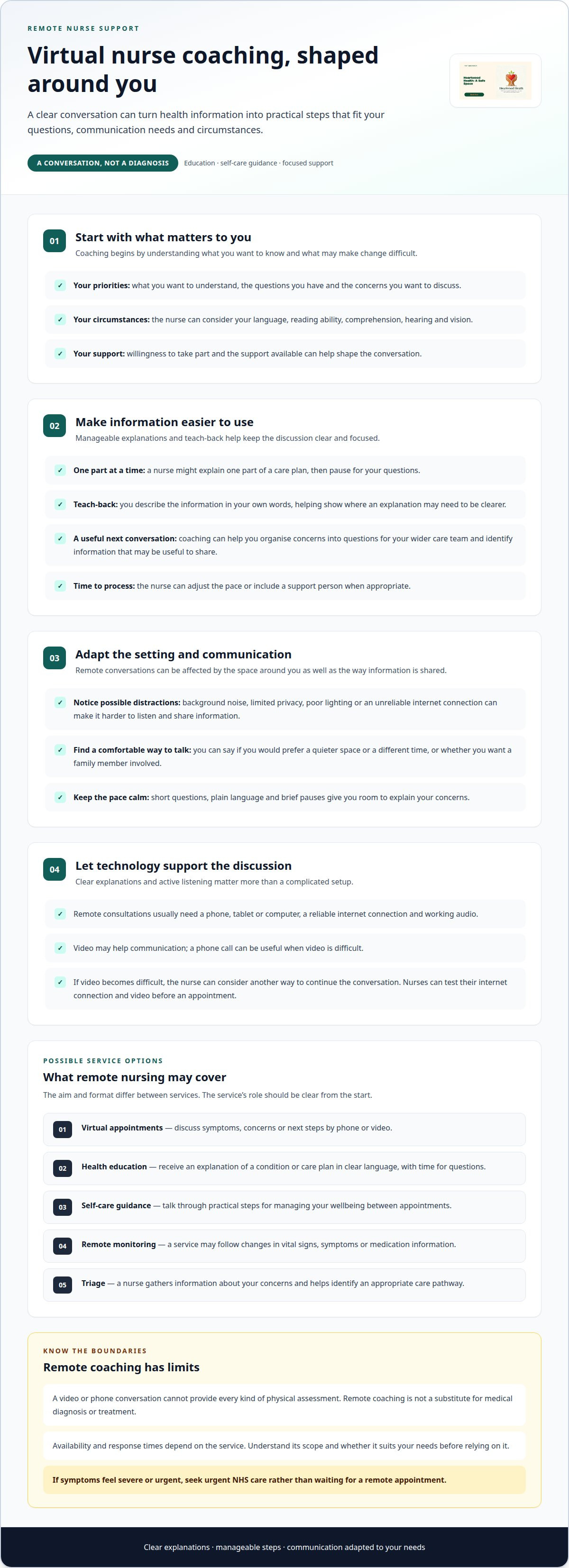
A patient’s home can shape how a conversation goes. Background noise, limited privacy, poor lighting or an unreliable internet connection can make it harder to listen and share information. A nurse can ask whether the patient would prefer a quieter space or a different time, then use short questions and plain language. If a family member is present, for example, the nurse can clarify whether the patient wants them involved. A calm pace and brief pauses also give the patient room to explain their concerns.
Remote nurse support differs from a GP appointment, NHS 111 and in-person support. A GP can assess health concerns, while NHS 111 helps people find the right urgent care pathway; remote nursing services may focus on education, monitoring or coordination. A video or phone conversation cannot provide every kind of physical assessment.
In the UK, ask how a service protects personal information before sharing your details. The provider should explain how it records information, who can access it and how it supports private conversations. You can choose a quiet place and tell the nurse if someone else is within earshot.
Most remote consultations require a phone, tablet or computer, a reliable internet connection and working audio. Video may help communication, but a phone call can be useful when video is difficult. The nurse can adapt the conversation to the equipment available.
Eligibility depends on the service, the patient’s needs and whether remote communication is suitable. Children and people with complex needs may take part when the format supports clear communication and allows the right people to contribute.
Remote care has limits: a nurse cannot physically examine someone through a screen. If symptoms feel severe or urgent, seek urgent NHS care rather than waiting for a remote appointment.
Virtual nurse coaching
Virtual nurse coaching can turn health information into practical steps that fit a patient’s circumstances. The nurse first explores what the patient wants to understand, what questions they have and what might make change difficult. Before sharing information, the nurse considers reading ability, comprehension, language, hearing, vision, willingness to take part and available support. These details help shape the conversation, rather than assuming everyone learns in the same way.
Information is easier to use in manageable portions. A nurse might explain one part of a care plan, pause for questions, then ask the patient to describe it in their own words. This teach-back approach helps reveal where an explanation needs to be clearer. For example, if a patient cannot explain when to follow an instruction, the nurse can revisit that point in simpler language.
Coaching can also help patients prepare for conversations with their wider care team. A nurse can help organise concerns into clear questions, discuss self-care guidance and identify information that may be useful to share. The nurse can adjust the pace if a patient needs time to process information, or include a support person when appropriate. It’s a focused conversation, not a substitute for medical diagnosis or treatment.
Technology should support the discussion, not distract from it. Nurses can test their internet connection and video before an appointment. Patients need a device and connection that let them hear and respond. If video becomes difficult, the nurse can consider another way to continue the conversation. Clear explanations and active listening matter more than a complicated setup.
For nurses exploring nursing jobs, a virtual coaching position calls for patient communication, patience and the ability to explain information plainly. For patients, remote nurse support may suit questions that benefit from time and structured guidance. If you’re looking for confidential wellbeing and health support, a calm conversation can help you consider what kind of guidance feels useful.
What private remote nursing services are available in the UK?
Private remote nursing services can offer different kinds of support by phone or video. A service may focus on one health need or connect several parts of a patient’s care. Understanding its purpose can help you decide whether a remote conversation suits your needs.
Common options include:
- Virtual appointments: a nurse discusses symptoms, concerns or next steps with you by phone or video.
- Health education: a nurse explains a condition or care plan in clear language, then responds to your questions.
- Self-care guidance: a conversation can help you understand practical steps for managing your wellbeing between appointments.
- Remote monitoring: nurses may follow changes in vital signs, symptoms or medication information as part of a service.
- Triage: a nurse gathers information about your concerns and helps identify an appropriate care pathway.
For example, someone managing an ongoing condition might use remote monitoring to share symptom changes, then discuss them with a nurse. A person who has received a new care plan might instead need help understanding its instructions. The aim and format differ, so the service’s role should be clear from the start.
Remote consultations can also support care teams by sharing patient updates and helping people understand where to take questions. They don’t replace every face-to-face assessment. A nurse cannot physically examine someone through a screen, and some concerns need in-person support. If a clinician needs to assess you physically, a remote appointment may not meet that need.
When considering private remote nursing in the UK, look at what happens during an appointment: who speaks with you, whether monitoring or follow-up is included, and how urgent concerns are handled. These details help distinguish clinical assessment and triage from health education or wellbeing guidance. The right format depends on the question you want help with and the support the service provides.
Is remote nurse support available 24/7, and how quickly can a nurse respond?
Remote nursing isn’t automatically available around the clock. Availability depends on the service’s opening hours and staffing. A pre-booked video consultation, a telephone advice line and continuous monitoring are different service models. A booked appointment, for example, gives you an agreed time to speak, while a monitored service may have separate arrangements for reviewing patient updates.
Response times depend on how you contact the service, its current workload and whether your conversation is booked. A message sent outside opening hours may be handled differently from a scheduled appointment. Before relying on a service for ongoing support, understand its contact channels, operating hours and how it communicates about response expectations. This can help you plan around work, caring responsibilities or other appointments.
Urgency matters too. A routine question about health information may be handled differently from a new or worsening concern. Remote nursing may offer education, monitoring or triage, but it isn’t a substitute for emergency care. If you feel seriously unwell, don’t wait for a routine callback or booked consultation: use an appropriate urgent care service.
For care teams, clear response arrangements help set expectations. A team may explain who reviews incoming information, how changes in symptoms are handled and what happens if a patient cannot be reached. A remote monitoring pathway, for example, needs a defined process for reviewing submitted readings. A coaching appointment, by contrast, centres on a planned conversation and agreed topics.
When choosing support, look for plain explanations of hours, appointment booking, follow-up and urgent-care boundaries. Ask how the service handles a missed call or a concern raised outside its operating hours. These practical details can help you decide whether its availability fits your needs. If you’d like to talk through wellbeing support, arrange a conversation about your support needs.
Heartwood Health: Confidential nurse-led wellbeing & health support
Heartwood Health provides Confidential wellbeing and health support through Nurse-led wellbeing support for people who would value a thoughtful conversation about their wellbeing or health concerns. A nurse can help you explore what feels difficult, understand relevant health information and consider practical next steps. This may suit you when you want guidance and support, rather than medical diagnosis or treatment.
This support may also help if you’re supporting a family member and would value a calm space to talk through your concerns. You can share what matters to you and ask questions without having everything worked out beforehand.
To explore whether Confidential wellbeing and health support and Nurse-led wellbeing support feel right for you, contact Heartwood Health.
Choose a next step that feels right for you
The right remote nurse support starts with the kind of conversation you need. You might want help making sense of health information, space to talk about a concern or guidance on what to raise with your wider care team. Knowing what you hope to take away can make it easier to decide whether a nurse-led conversation suits you.
Heartwood Health provides Confidential wellbeing and health support and Nurse-led wellbeing support. If you’re unsure where to begin, share what’s on your mind and ask questions. You don’t need to have everything organised before reaching out. A conversation can help you consider whether this support matches what you’re looking for.
Contact Heartwood Health to talk about your needs. Taking a first step can be simple, and you can move at a pace that feels comfortable.
Frequently Asked Questions
What’s offered here?
Heartwood Health offers Confidential wellbeing and health support, with Nurse-led wellbeing support for individuals and businesses, including fully remote online sessions. This remote nurse support can give you space to talk through wellbeing concerns and consider helpful next steps. A free 10-minute introductory call lets you discuss what you’re looking for and ask questions before deciding whether the service feels suitable.
What is remote nurse support and what services does it include?
Remote nurse support is wellbeing or health guidance provided by a nurse through online or telephone communication. The exact scope varies by service. At Heartwood Health, the focus is Confidential wellbeing and health support, not medical diagnosis or treatment, prescribing medication or emergency care. For symptoms that need clinical assessment, consult your GP or health provider. This form of remote nurse support is intended for guidance, not urgent care. Disclaimer: not medical diagnosis or treatment. Always consult your GP or health provider.
How is patient information protected during remote nursing support in the UK?
Before sharing personal details, ask how the service records information, who can access it and how it supports private conversations. Choose a quiet place and let the nurse know if someone else is within earshot.


