

Confidentiality should make it easier to seek support, not leave you unsure about who may see what you share.
With confidential wellbeing support, your information is treated privately, but confidentiality is not absolute: it may be shared if there is a serious concern about someone’s safety; you can seek support without a referral, and you can ask how privacy works before deciding what to discuss.
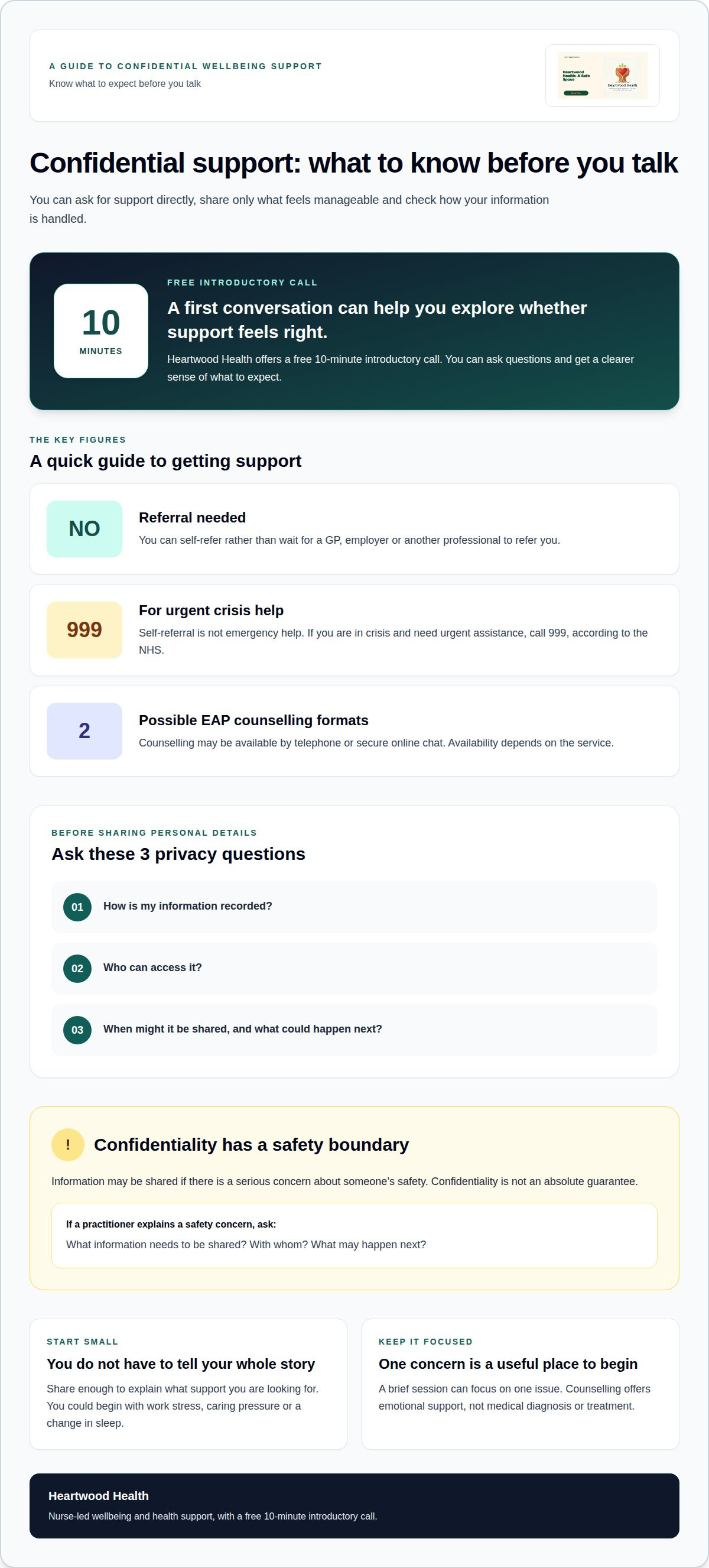
This article explains how self-referral works, what is generally kept confidential and when information may be shared, then outlines what brief support can involve, including a free 10-minute introductory call, which is the only free part, so you can approach a first conversation with a clearer sense of what to expect and what you feel comfortable sharing.
Key Takeaways
- You can seek support without a referral, making it easier to start when you feel ready.
- Understand the limits of confidentiality, including when information may need to be shared over a serious safety concern.
- Brief support sessions can offer a focused space to talk, with some counselling available by telephone or secure online chat.
- Heartwood Health offers nurse-led wellbeing and health support, with a free 10-minute introductory call to help you explore whether it feels right for you.
Confidential self-referral
In the United Kingdom, you can self-refer for this support; no referral is needed to use the service. You can approach a service yourself rather than waiting for a GP, employer or another professional to refer you. Explain what has prompted you to seek help, such as work stress, caring pressure or a change in sleep.
When making an initial enquiry, share enough to explain the support you’re looking for. You might say that anxiety is affecting your work or that a family concern is weighing on you. Ask what happens next so you can decide whether to continue and understand the process.
Before a conversation, ask how your information is recorded, who can access it and when it might be shared. A clear explanation helps you understand the boundaries before discussing sensitive details. You can start with the subject rather than the whole story: “I’m struggling with caring responsibilities” is enough to open the conversation.
Self-referral isn’t the same as emergency help. If you’re in crisis and need urgent assistance, call 999, according to NHS. If your need isn’t urgent, self-referral lets you ask directly about wellbeing support and whether it fits your situation.
When you get in touch, say how you’d prefer to be contacted and whether it’s safe to leave a message. You can also mention access needs, such as a quiet time to speak or support with communication. These details can help make the first conversation manageable.
Sharing information when there is a serious risk of harm
Confidentiality has a safety boundary. A wellbeing service may share information if there is concern about someone’s safety. Before sharing personal details, ask what the service treats as a serious safety concern, who may receive information and what action could follow. This helps you understand the limits of a conversation before deciding what to discuss. For example, if you mention fearing someone may be harmed, ask how the practitioner would respond.
The University of Nottingham’s process for students is a specific example, not a rule for every support service. A student may be offered the chance to review wellbeing notes before they are shared with the police. A police request for those notes would require a Data Protection Act request and would usually include the student’s consent.
A court situation is different. A judge presiding over a case may require the University of Nottingham to share a student’s wellbeing notes with the court. This example shows why confidentiality is not an absolute guarantee. Ask how a service handles requests from police or a court, and whether you would be told before information is disclosed.
If a practitioner explains a safety concern, ask what information needs to be shared, with whom and what may happen next. These questions can clarify the process, particularly if the concern involves a family member, colleague or someone else.
The University of Nottingham has a duty of care to the public when a student is training as a medical, health or social care professional, or as a teacher. That context may affect how a safety concern is handled. Asking why information may be disclosed can help you understand the decision and what support follows.
Brief therapy and support sessions
In the UK, confidential wellbeing support can include a focused conversation about emotional or practical concerns, wellbeing guidance and signposting. Structured counselling may also be available through an employee assistance programme (EAP). These sessions provide space to talk through a difficulty, such as stress affecting sleep or a change at home.
EAP counselling may be available by telephone or secure online chat. Choose a format that feels manageable and a place where you have privacy. A telephone session might suit a quiet break, while secure chat lets you communicate in writing.
A brief session can be more useful when you focus on one issue, such as feeling overwhelmed by caring responsibilities, rather than trying to cover everything at once. The counsellor can help you describe what feels hardest and consider a practical next step.
You don’t have to tell your whole story at once. Start with what is affecting you now, such as tension before work or difficulty switching off in the evening. A practitioner can listen, ask questions and help you consider what support could be useful.
The aim is to give you a focused space to reflect and talk through your concerns. If you’re finding a conversation with your manager difficult, for example, you could organise your thoughts and consider how to approach it. Counselling offers emotional support, not medical diagnosis or treatment. A focused conversation can still help you decide what you need next.
Confidential wellbeing support
Workplace wellbeing services, NHS support and charity services serve different needs. Workplace support may address concerns linked to work, NHS services provide healthcare, and charities may focus on particular concerns or communities. For example, an EAP may offer structured counselling, while a charity helpline may provide listening or guidance.
In the UK, you can look for confidential support through a workplace EAP, NHS services, charities and independent wellbeing providers. One mental health support service operates 24/7 and can be contacted on WhatsApp at 0800 884 0655. The right route depends on whether you need emotional support, healthcare or urgent assistance.
Confidential wellbeing support may include conversation about emotional or practical concerns, health education, brief counselling and signposting. The format depends on the service and may include a telephone call or secure online chat. Before sharing personal details, ask how information is handled and when confidentiality may be limited.
A provider can help you identify relevant local support by understanding your concern and location, then explaining suitable community options. For example, if caring responsibilities are affecting your wellbeing, they might discuss local family or carer resources. Ask what each service can help with and how to access it.
Local options can differ, so describe the kind of help you need and any access barriers. A provider may help clarify whether a community group, charity service or NHS route is relevant. If you need urgent help during a crisis, NHS guidance is to call 999. This is different from arranging non-urgent wellbeing support, which can focus on practical next steps and ongoing concerns.
Heartwood Health: Confidential nurse-led wellbeing & health support
Heartwood Health provides confidential nurse-led wellbeing and health support for people seeking a calm, practical space to discuss concerns affecting daily life. It may suit you if stress, caring pressures or changes in your wellbeing are weighing on you, and you would value a supportive conversation.
A confidential, nurse-led conversation can help you describe what is troubling you and consider what support might be useful. You could talk about feeling overwhelmed by family responsibilities, uncertainty about a health concern or pressure affecting your routine. Start with the issue that matters most to you.
Nurse-led wellbeing support offers a space to discuss your concerns and consider appropriate next steps. It does not provide medical diagnosis or treatment or prescribe medication, and it is not a substitute for those services.
Before sharing personal details, ask how your information is handled and what confidentiality limits apply. This can help you decide what feels comfortable to discuss. Families can access support wherever they live, which may be useful when their circumstances shape the guidance they need.
You don’t need a polished explanation to begin. A simple opening, such as “I’m finding things difficult at home”, can get the conversation started. From there, you can focus on your concerns and what you hope to understand or work towards.
If this kind of support feels like a helpful next step, you’re welcome to contact Heartwood Health with questions or to share what you’re looking for.
Frequently Asked Questions
Who can see what and why?
Ask who can access different parts of your record and why. You might ask whether administrative staff can see appointment details, who can read session notes and how long records are kept. These are distinct questions, so an answer to one may not cover the others. You can request the privacy information in writing if that’s easier to review.
Who will know I’ve accessed wellbeing services?
Before arranging an appointment, ask how the service will contact you. Find out what name appears on emails or messages, whether reminders are sent and whether you can choose a contact method. This can help if you share a phone or inbox. You can also ask how to update your preferences.
Is wellbeing support through an employer confidential?
Ask how the employer’s arrangement works, including whether it involves individual sessions, workplace visits or another format. Find out whether your employer receives attendance information or reports, and whether reports identify individuals. If you have a particular workplace concern, ask how your personal discussion is kept separate from general information shared with the organisation.
What information can a wellbeing service share without consent in the UK?
There is no single answer for every service or situation. Ask the provider what circumstances could lead to information being shared, what information might be involved and how that decision is made. You can also ask whether you would be told beforehand. This gives you a clearer understanding of the service’s approach.
When can confidentiality be broken for safeguarding or risk of harm?
If safeguarding comes up, ask the practitioner to explain the concern plainly and describe what happens next. Ask who may be involved, what support is available to you and whether you can share relevant context. If the concern relates to someone you care for, explain what support they already receive and what might help keep them safe.
What should I expect at a confidential wellbeing appointment?
Before the appointment, note the main point you want to discuss and any practical questions about the session. Ask whether you can pause, take a break or return to a topic later. If an adjustment would help you take part comfortably, such as extra time to process information, mention it when arranging the appointment.


