

What can you expect from a nurse health consultation when the support, setting and time involved can differ?
It’s understandable to want a clearer picture. A one-off conversation, specialist nursing and continuing care each involve different kinds of support, so it helps to know what the contact is for and what the nurse may discuss.
This guide explains how private and specialist nursing arrangements differ, and how expertise, duration and setting can shape the support provided across the UK. It also clarifies how nurse-led wellbeing support differs from medical diagnosis or treatment, helping you consider whether you’re looking for health education, ongoing wellbeing guidance or a clinical appointment. You’ll find practical context to help you decide what kind of support may suit your needs.
Key Takeaways
- Understand what a nurse consultation may cover, from discussing your concerns to exploring helpful next steps.
- See how nurse-led wellbeing support can offer health guidance without replacing medical diagnosis or treatment.
- Learn how health education can help you make sense of your options and find suitable local services.
- Explore how confidential support from Heartwood Health may help you and your family wherever you live in the UK.
What is included in a nurse health consultation?
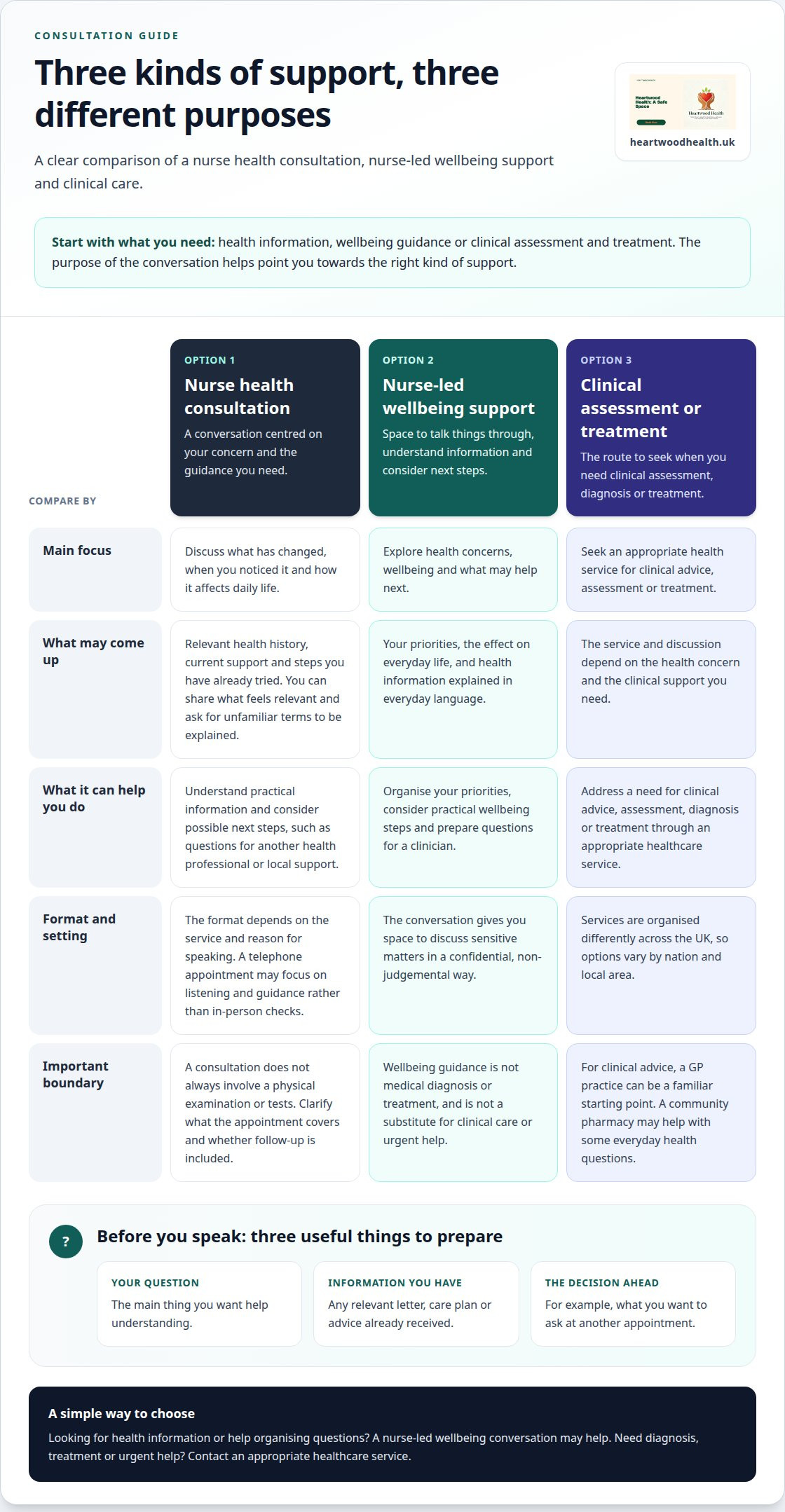
A nurse health consultation usually focuses on your concern and the guidance you need. You might want to discuss changes in sleep, stress or mobility, or ask questions about a long-term health concern. The nurse may ask what has changed, when you noticed it and how it affects daily life, keeping the conversation centred on your priorities.
You may be asked about relevant health history, current support and steps you’ve already tried. If you’re discussing tiredness, for example, you could talk about your routine, sleep and how it affects work or caring responsibilities. Share what feels relevant, and ask for unfamiliar terms to be explained in everyday language.
The discussion may then turn to practical information and possible next steps. These could include health education, questions to raise with another health professional, or ways to find local support. A nurse consultation does not always involve a physical examination or tests; the format depends on the service and the reason for speaking. A telephone appointment, for example, may focus on listening and guidance rather than in-person checks.
Before arranging an appointment, clarify its purpose. Wellbeing guidance and health education differ from clinical assessment or treatment. Ask what the appointment covers, how it takes place and whether follow-up is included. Understanding these details helps you choose support that fits your concern.
How nurse-led wellbeing support can help
Nurse-led wellbeing support gives you space to discuss health concerns and consider what may help next. You might feel stressed, have questions about a long-term condition or be unsure how to raise a concern with a health professional. A nurse can listen, help you organise your priorities and explain relevant health information in everyday language.
If tiredness is affecting your routine, for example, you could talk about what you’ve noticed and its impact on work, family life or caring responsibilities. You can consider practical wellbeing steps and prepare questions for a clinician. This guidance can help you explain a complex concern, without promising a particular outcome or replacing clinical care.
Support can also help you consider your needs as a whole. A parent supporting a child with additional needs might want to discuss the effect on family wellbeing. Someone adjusting to a health change may need help understanding information and deciding what to ask next. A confidential, non-judgemental conversation gives you space to discuss sensitive matters.
The purpose is guidance, not medical diagnosis or treatment. If you need a diagnosis, treatment or urgent help, wellbeing support isn’t a substitute for those services. For questions about health, wellbeing or the next step, Confidential wellbeing and health support can offer a place to start. You can share what’s on your mind and ask questions at a pace that feels manageable.
Health education and advice for your next steps
Health education can help you understand information and consider what support may suit your concern. If you’ve received advice that is difficult to understand, for example, a nurse can explain its wording in everyday language and help you identify what remains unclear. This can help you take part in conversations about your care, without turning general guidance into a clinical assessment.
Start by identifying what you want help with. Do you want to understand a health topic, talk through your wellbeing or seek clinical assessment? These needs call for different support. A nurse-led wellbeing conversation can offer health education and help you organise questions; assessment and treatment require an appropriate clinical service.
To make a conversation useful, you could bring:
- The main question you want answered, such as what a health term means.
- Any information you’ve already received, including a letter or care plan.
- The practical decision you’re facing, such as what to ask at an appointment.
Afterwards, note the guidance in your own words and list any unanswered questions. If it mentions changing your routine, for example, clarify what that involves and how it fits your circumstances. For a clinical opinion, assessment or treatment, seek support from an appropriate healthcare service. If your concern changes or becomes urgent, contact a suitable health service promptly. Clear health education can help you understand your options, prepare for conversations and choose an informed next step, even if you haven’t worked everything out yet.
Finding local health services across the UK
The right route into care depends on what you need. Health services are organised differently across the UK, so options vary by nation and local area. First distinguish between needing clinical assessment and wanting health information or wellbeing guidance. This helps you approach a service suited to your concern.
For a health problem that needs clinical advice, your GP practice is a familiar starting point. A community pharmacy may help with some everyday health questions. Local health service directories can help you find support for a particular need, such as managing a long-term condition. If you’re unsure where to start, describe your concern plainly and ask which service handles that kind of support.
Before contacting a service, it can help to have these details ready:
- Your main concern and what you hope to get help with.
- Any relevant letters, care plans or information you’ve already received.
- Practical needs, such as accessible appointments or support for a family member.
Families supporting a child with additional needs may have several services involved. Keeping a short record of who provides each type of support can make follow-up conversations clearer. If you move, ask your current service how support can continue and which local team can help next.
Where health education or wellbeing guidance would help you make sense of your options, ask about Confidential wellbeing and health support. It’s available to families wherever they live in the UK, offering a supportive conversation alongside local services.
Heartwood Health: Confidential wellbeing and health support
Heartwood Health provides Confidential wellbeing and health support for people who want a dedicated space to discuss their concerns. It may suit you if you’re looking for clear health guidance, want to talk through a concern or need help considering next steps. You can raise sensitive subjects in a supportive, non-judgemental conversation.
You might want to discuss how a health concern affects daily life, understand information you’ve received or prepare questions for a clinical appointment. A nurse can help you organise your thoughts and explore relevant wellbeing guidance. This can be useful if you’re unsure how to frame a question or where to begin; you don’t need to have everything worked out before speaking.
The support focuses on wellbeing and health guidance. It does not provide medical diagnosis or treatment, prescribe medication or replace urgent or emergency care. If you need clinical assessment or treatment, contact an appropriate healthcare service. Knowing the difference helps you choose support that matches your needs.
Families can access support wherever they live in the UK. If you’re considering whether this kind of conversation may help, Heartwood Health offers a free 10-minute introductory call. It gives you a chance to share what you’re looking for and ask questions before deciding whether to take things further. There’s no need to wait until you have a perfect description of your concern. A simple starting point, such as “I’d like help understanding my options”, is enough to begin the conversation.
If you’d like to talk about the support that may suit you, get in touch with Heartwood Health.
Choose a next step that feels right for you
Identifying the support you’re seeking and what the appointment covers can help you decide what you need. Consider what would make a conversation useful: space to talk, clearer information or help preparing questions for a health professional. You don’t need every detail ready. You can begin by describing what’s been on your mind.
Heartwood Health offers Confidential wellbeing and health support for people seeking a thoughtful space to discuss their health and wellbeing. The team can help you explore guidance and consider possible next steps within the scope of wellbeing support.
If you’d like to ask a question or discuss whether this support suits you, get in touch with Heartwood Health. A conversation can help you decide what feels right for you.
Contact Heartwood Health to start a conversation.
Frequently Asked Questions
What can a private nurse health consultation cover?
A private nurse health consultation can give you time to discuss a concern, ask questions and explore relevant guidance. The focus depends on your reason for speaking and the support provided. You might want help understanding health information or preparing questions for a clinical appointment. If you need assessment or treatment, seek appropriate clinical care.
What can I expect from a nurse consultation?
Expect the discussion to focus on your concerns and the help you’re seeking. The nurse may ask about relevant background and what you hope to understand or decide. Before arranging an appointment, clarify whether it takes place by phone, online or in person, what topics it covers and whether follow-up is included.
Does the support available differ across UK regions?
Local health services and access routes vary across the UK. Your location may affect which in-person clinical services are nearby, while remote support offers another way to access guidance. If you need clinical care, identify the service that handles your concern locally. For wellbeing guidance, consider whether a confidential conversation could help you understand your options and prepare questions.


