

What if the best next step is to ask about alternatives before agreeing to treatment? It’s understandable to feel rushed or unsure in an appointment, especially when you’re weighing possible benefits against risks. Preparing questions for a doctor’s appointment in the UK can help you explain what matters to you and make space for a clearer conversation.
This guide will help you ask about treatment choices, what may happen with or without treatment, possible risks and side effects, and how to discuss the medicines, vitamins or supplements you take. You’ll also find prompts for checking what happens next, including follow-up plans and test results, so you can leave with a clearer sense of the next steps.
Key Takeaways
- Ask about the benefits, risks and alternatives to a proposed treatment, including what may happen if you wait or choose no treatment.
- Before you leave, clarify who will contact you, when to expect results and what to do if you have questions or your health changes.
- Bring a list of your medicines, vitamins and supplements, or photos of their packaging, so you can discuss them during the appointment.
- Write down your main concern and a few priority questions to help you make the most of your time with the doctor.
Questions about treatment options, risks and effectiveness
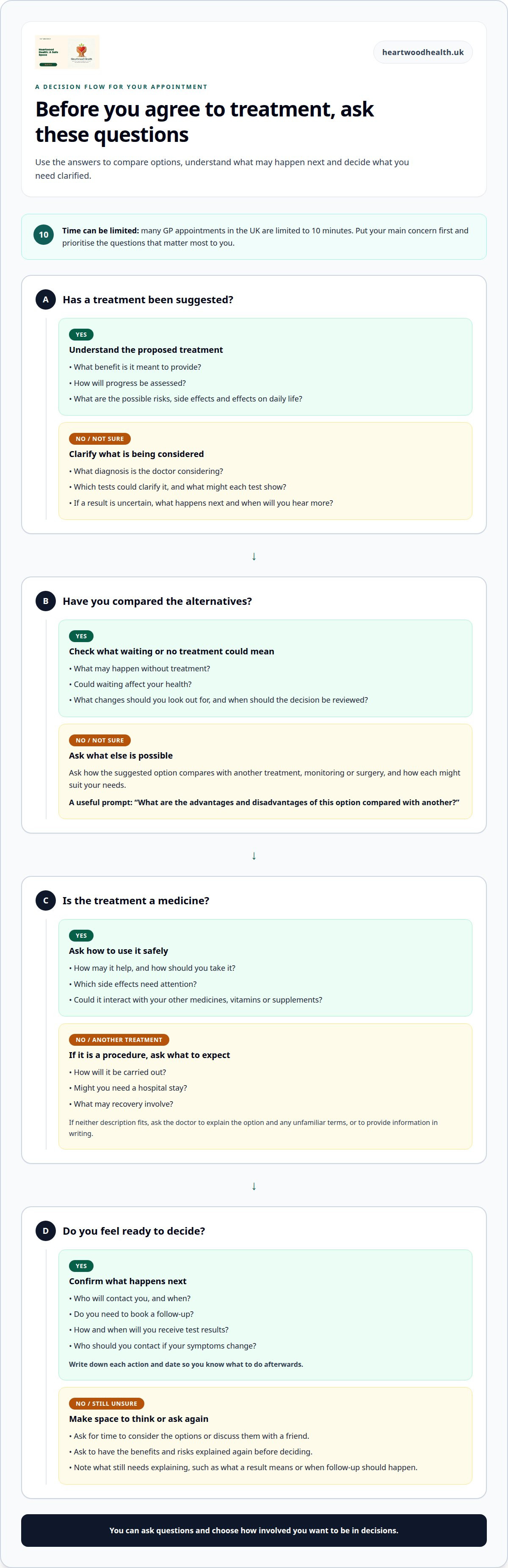
Preparing questions for a doctor’s appointment in the UK can help you explain what matters most. Ask what diagnosis the doctor is considering, which tests could clarify it, and what each test may show. If a result is uncertain, ask what happens next and when you’ll hear more. These questions can help you discuss possible causes of your symptoms and understand your options.
For each treatment, ask what benefit it aims to provide and how progress will be assessed. Then ask about possible risks, side effects and effects on daily life. A useful comparison is: “What are the advantages and disadvantages of this option compared with another?” Ask whether alternatives include a different treatment, monitoring or surgery, and how each might suit your needs.
It’s also reasonable to ask what may happen without treatment. Ask whether waiting could affect your health, what changes to look out for, and when to review the decision. The answer may depend on the condition, its effect on your life and how quickly it changes. You can ask for time to consider the options or discuss them with a friend.
If medication is suggested, ask how it may help, how to take it and which side effects need attention. For a procedure, ask what to expect, how it will be carried out, whether a hospital stay might be needed and what recovery may involve. Ask the doctor to explain unfamiliar terms or provide information in writing.
In Scotland, according to UK legislation, the Patients Rights Act (2011) sets out legal rights for people receiving health care. Wherever you are in the UK, you can ask questions and choose how involved you want to be in decisions. You can also ask to have the benefits and risks explained again before deciding.
Checking next steps and follow-up arrangements
Before leaving your appointment, confirm what should happen next and when. Ask who will contact you, whether you need to book a follow-up and who to contact if your symptoms change. For tests, check how you’ll receive the results and when to expect them. Write down each action and date so you know what to do afterwards.
You can bring a friend or family member for support. They can help you remember information, take notes or raise a concern you might otherwise miss. If you’d prefer to discuss something privately, you can ask them to wait outside for part of the appointment.
Many GP appointments in the UK are limited to 10 minutes. Start with your main concern, then ask which follow-up questions need another appointment. If you have several symptoms, explain which affects everyday life most and what you hope to decide during this visit.
If you need an interpreter or accessibility support, contact your GP surgery before the appointment to discuss arrangements. GP surgeries can arrange a professional interpreter. Tell the team if a telephone or online appointment is difficult for you. Children should not be asked to interpret.
Need more time, or still have questions? Ask the GP what can be covered now and whether you can return to the discussion. If you leave confused or unhappy, you can make an appointment with another doctor in the practice. Note what you still need explained, such as what a result means or when follow-up should happen.
To access medical records before an appointment, contact your GP surgery and ask how to view or obtain the relevant information. For test results, ask how and when they’ll be shared. If expected results haven’t arrived, follow up with the healthcare professional and ask what they mean. Keep any letters or results with your appointment notes.
Bringing a list of medicines, vitamins and supplements
Before your appointment, write down every medicine you currently take, including prescribed and over-the-counter products. Add vitamins, herbal remedies and supplements, even if you only take them occasionally. A complete list gives your healthcare professional a clearer picture of what you use when discussing symptoms, treatment or possible side effects.
For each item, include details that help identify it and explain how you take it. If you’re unsure of a name or dose, bring the packaging or a clear photo rather than guessing. Include medicines you’ve recently started or stopped, and note any effects you’ve noticed, such as feeling unusually tired after starting a new tablet.
- Medicine, vitamin or supplement name
- Strength or dose shown on the packaging
- How often you take it and when
- Reason for taking it, if you know
Use the appointment to ask whether your medicines, vitamins or supplements could interact with one another or affect a proposed treatment. Mention any side effects and ask what changes you should look out for. If you take several products, reviewing them together can help the healthcare professional consider the full picture rather than one item in isolation.
If you’re unsure what a prescription is for or how to take it, ask a pharmacist or another health professional for help. You can also ask a family member to help prepare your written list, particularly if medicine names are difficult to remember. Keep the list updated when a prescription changes so you can bring an accurate record to your next appointment.
Preparing questions before a doctor appointment
Make a short list of symptoms and questions before seeing your GP. Note when each symptom began, how it has changed, and what makes it better or worse. The Patients Association advises tracking symptoms over 24 hours to help identify patterns. Add one example of how symptoms affect work, sleep or everyday tasks.
Put your main concern first, then write what you hope to understand or decide. For example, you might want to explain recurring headaches and ask what could be causing them. Some GP appointments may be limited to 10 minutes, so prioritising helps you use the time for the issues that matter most.
Keep questions clear and specific. Ask, “What might explain these symptoms?” or “What should I do if they change?” If a term or explanation is unclear, ask the healthcare professional to explain it another way. Bring written notes, and ask a friend or family member to help you remember details.
For a specialist or NHS hospital appointment, write down two or three priority questions. Take relevant letters, test information and your symptom notes, then ask what the specialist hopes to learn from any planned tests. If you have several concerns, mark the one you most need addressed and explain why it matters to you.
Before attending, check the appointment details and note anything you need to make participation easier. In England, tell the surgery or hospital about communication support needs ahead of time. Clear preparation can help you explain your concerns and understand what happens next. If you’d value support in organising health concerns, explore confidential nurse-led wellbeing support.
Heartwood Health
Heartwood Health provides confidential, nurse-led wellbeing and health support for people who want space to talk through health concerns. If preparing for an appointment feels difficult, this support can help you organise what you want to raise and identify the questions that matter to you. You don’t need to have everything worked out before asking for support.
You might be unsure how to describe a change in your wellbeing, which concern to mention first, or how to explain its effect on everyday life. Talking these points through can help you find clear words for the appointment. You can also consider what you hope to understand, such as possible next steps or where to seek further support.
This support complements conversations with your GP or other healthcare professionals. It is not medical diagnosis or treatment, and it does not include prescribing medication. For decisions about symptoms, tests, medicines or treatment, speak with the professional responsible for your care. If you need urgent medical help, use the appropriate urgent care route rather than waiting for wellbeing support.
Heartwood Health can be a helpful next step if you’d value a confidential conversation before or after an appointment, or support in thinking through your wellbeing concerns. Bring the questions that feel difficult to ask, or talk through what you’d like to discuss with a healthcare professional. The aim is to help you feel clearer about your concerns and the support you may need, without replacing clinical care.
If you’d like to talk about the support available, contact Heartwood Health.
Take your next step with confidence
Your next appointment can be a chance to share what matters to you and take part in decisions about your care. Preparing questions for a doctor’s appointment in the UK isn’t about finding perfect words. It’s about making space for a conversation that reflects your concerns and priorities.
If you’d like support thinking through what you want to discuss, Heartwood Health offers confidential, nurse-led wellbeing and health support. The service can help you explore your wellbeing concerns and prepare for a conversation with a healthcare professional. This support complements clinical care; it doesn’t replace medical diagnosis or treatment.
You can take things one step at a time. A confidential conversation may help you feel clearer about what you want to raise and what support would be useful. There’s no pressure to have every question ready before you reach out.
Contact Heartwood Health to talk about the support that may suit you. You deserve to feel heard as you decide what to ask next.
Frequently Asked Questions
Are there any alternatives?
Yes, ask what other options could suit your condition and circumstances. Depending on the situation, alternatives may include a different treatment, monitoring changes or waiting before deciding. Ask how each option may affect your health and daily life, and what support it involves. You can also ask for time to consider the choices and discuss them with someone you trust.
What are the risks?
Risks vary according to the treatment, procedure or test being considered. Ask which side effects or complications are possible, how likely they are in your circumstances, and what signs need prompt attention. You might also ask how the proposed option compares with alternatives and what steps are taken to reduce or manage potential problems. Request an explanation in everyday language if anything is unclear.
What if I do nothing?
Ask what may happen if you decide against treatment or delay it. The answer depends on the condition, its likely course and how changes in your health would be monitored. Find out what symptoms should prompt you to seek help, whether there is a suitable time to review the decision, and who to contact if things change. You can revisit your choice later.
What information should I take to a doctor appointment in the UK?
Take relevant letters, test results you already have and notes about changes in your health. If another healthcare professional has given you a care plan, bring it or note its key instructions. You can ask for copies of letters written about you and request written information during the appointment. Keep papers together so you can find the details you need easily.


