

Respectful care starts with listening, not judging. Non-judgmental health support means taking your feelings, experiences and needs seriously, without making assumptions about you. Feeling heard can make a sensitive conversation easier, while empathy, thoughtful questions and time to speak at your own pace can help build trust. Support shaped around your circumstances recognises that no single approach suits everyone. This guide explains what respectful practice can look like, from listening carefully to adapting wellbeing support to your needs, and how confidential, nurse-led support can provide a calm space to talk, in person or remotely. It is wellbeing support, not medical diagnosis or treatment.
Key Takeaways
- Respect your feelings and experiences without making assumptions about your character or choices.
- Listen without interrupting, then reflect back what you’ve understood before offering a response.
- Notice how your personal, cultural and emotional needs can shape your experience of care.
- Adapt support around your needs, helping you understand your options and express what matters to you.
1. Acceptance, genuineness and empathy
Acceptance means respecting your feelings, experiences and values, even when they differ from someone else’s. In a health conversation, that could mean discussing anxiety about a physical symptom without dismissing it as an overreaction. The concern may seem small to another person, but it feels real to you. Empathy means showing that your words and feelings have been heard, rather than rushing to correct or judge you.
Genuineness matters too. A caring response feels consistent: words, tone and body language all show attention. For example, a practitioner might pause, face you with an open posture and ask, “Have I understood what feels most difficult?” They can then listen to your answer and reflect it back. This helps you correct misunderstandings and keeps your perspective at the centre of the conversation.
The Equality Act 2010 is a UK law that prevents discrimination based on protected characteristics, according to The National Archives. The Human Rights Act 1998 sets out rights including respect for private life and freedom from degrading treatment, according to The National Archives. These laws provide important context for respectful care. In practice, inclusive communication also means using language that doesn’t make assumptions about your identity, beliefs, relationships or mental health.
NHS and charity support varies in access and confidentiality, depending on the service and how it is funded and delivered. Check how to access the service and how it handles personal information. Confidentiality can be especially important when discussing anxiety, relationships or other sensitive concerns. Before sharing details, ask what information is recorded and who may see it.
Empathy and compassion are related, but they aren’t identical. Empathy recognises what another person may be feeling; compassion adds a wish to respond kindly. If you’re worried about being judged, a supportive listener can acknowledge that worry, ask what would help you feel comfortable and give you time to answer. This makes room for your needs without defining you by one concern or experience.
2. Listening to understand rather than respond
Listening well means giving someone room to finish before deciding what to say. If you describe feeling anxious before an appointment, a listener can pause, let you explain what worries you, then summarise: “You’re concerned about what might happen during the visit.” You can correct or add to that summary. This keeps the conversation grounded in what you mean, rather than the listener’s assumptions.
Tone and nonverbal cues can add context, but they don’t prove what someone is thinking. A quiet voice, long pause or crossed arms might have several explanations. Instead of interpreting these as disinterest or anger, the listener can ask, “Would you like a moment, or shall we continue?” Open questions like this support clearer communication about mental health and other personal concerns.
Listening to different perspectives also matters when health concerns affect relationships. You and a family member may describe the same situation differently. A listener can hear each person’s account without taking sides, then check what each needs from the conversation. If several family members are present, they can speak in turn, while you retain space to express your own view.
Families can offer useful context about changes they’ve noticed, such as disrupted sleep or withdrawing from shared activities. Those observations don’t replace your own account. A respectful conversation distinguishes between what a relative has seen and what you say you’re experiencing. It also avoids treating a family member’s interpretation as proof of your feelings or intentions.
To interact thoughtfully, the listener can focus on your words, notice changes in tone and allow pauses without filling them. They can ask one question at a time, avoid interrupting and reflect back the facts and feelings they’ve heard. If speaking openly feels difficult, confidential nurse-led wellbeing support can provide a space to talk at your pace.
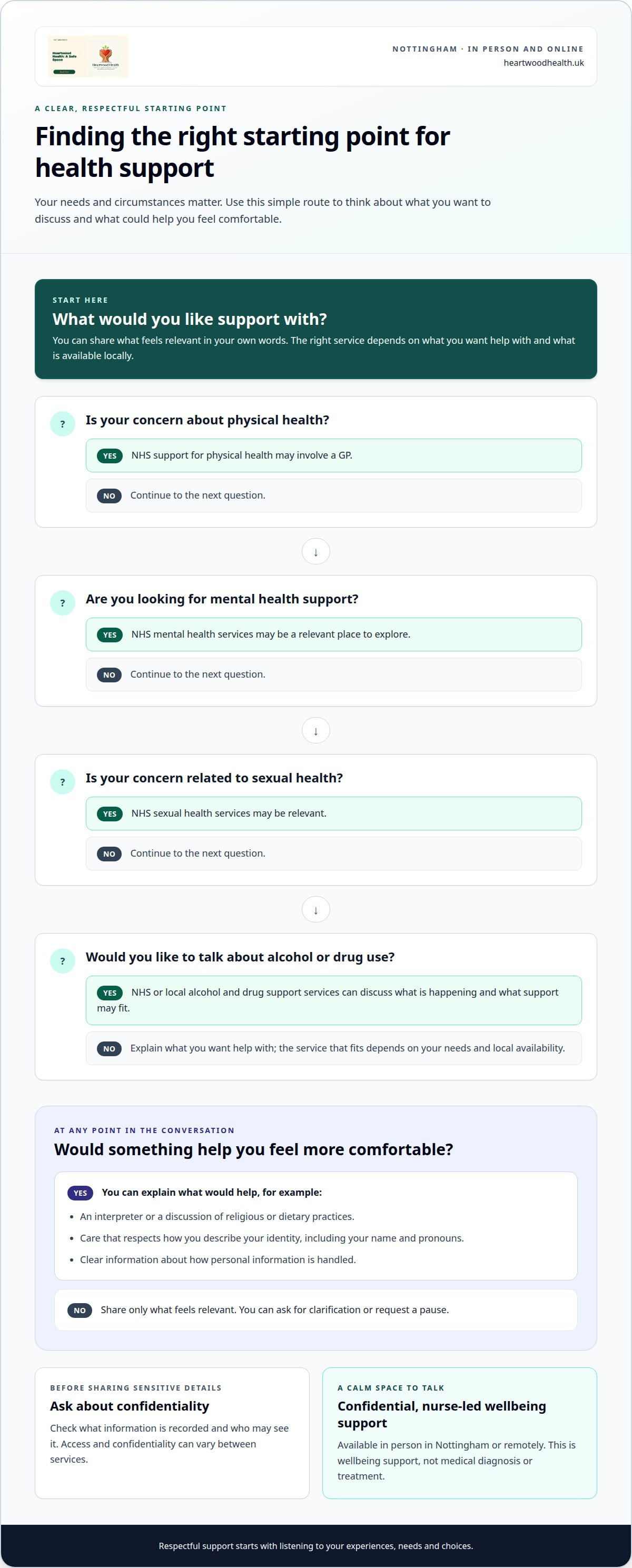
3. What Does Non-judgemental Practice Look Like?
Awareness begins with recognising that your experiences shape what feels safe and helpful. Someone discussing low mood, for example, may also be dealing with grief, work pressure, faith or family responsibilities. A practitioner can ask what matters most to you, rather than assuming they understand your emotional needs. This keeps your account central and gives you room to explain your circumstances.
NHS support for physical and mental health may involve a GP, mental health services, sexual health services, or alcohol and drug support. The right service depends on what you want help with and what is available locally. A non-judgmental approach means staff listen to your concerns and experiences, rather than making assumptions about your choices or identity.
Inclusive care recognises that culture, religion, age, disability, gender and sexuality can shape how you experience healthcare. You might need an interpreter, a discussion of religious or dietary practices, or care that respects how you describe your identity. When choosing a GP or healthcare provider, look for clear information about respectful communication and accessibility. You can also explain what would help you feel comfortable when arranging an appointment.
LGBTQ+ people can seek support through NHS services for physical or mental health, including sexual health services where relevant. You can explain your name, pronouns and concerns in your own words, and ask how personal information is handled. For alcohol or drug use, NHS and local support services can discuss what is happening now and what support may fit, without reducing you to past choices.
At first contact, expect questions about what brings you to the service and what you hope to discuss. You can share only what feels relevant, ask for clarification and request a pause. The practitioner can explain the next steps in the conversation and check they have understood you.
Mindful awareness means noticing thoughts and feelings without immediately treating them as facts. A practitioner might pause before interpreting a worried expression, then ask what you’re feeling. If you feel judged or discriminated against, explain what happened and how it affected you, then ask the provider about its complaints process. Specific examples can help clarify your concern and the response you’re seeking.
4. Adapting support to individual needs
Support works best when it reflects what matters to you, rather than following a fixed script. You might prefer time to think before answering, a written summary afterwards or help discussing how stress affects sleep and work. Sharing these preferences gives you a chance to express your needs and feelings, and can make the next step clearer.
In England, the Care Act 2014 promotes wellbeing and independence while respecting each individual's needs and preferences, according to The National Archives. That principle has a practical meaning: support should take account of your circumstances and choices. For example, someone managing caring responsibilities may need to discuss a realistic routine, whilst another person may want help understanding available options before deciding.
Adapting support also means making space for difficult feelings without treating them as a problem to correct. You may feel uncertain, frustrated or worried about a change. A useful conversation can explore what sits behind those feelings, what you want to be different and what feels manageable now. The aim is to help you weigh options, not impose someone else’s priorities.
NHS support is available through health services in England, Scotland, Wales and Northern Ireland, including primary care and mental health services. The route and local provision depend on where you live and what support you need. A tailored conversation can help clarify what you want to discuss and which needs feel most pressing.
Useful adjustments can be simple: agree what to focus on first, use clear language, pause if a topic feels difficult, and revisit the plan as your circumstances change. If you’d value confidential, nurse-led wellbeing support while talking through personal needs, explore support for your wellbeing.
Heartwood Health: Confidential nurse-led wellbeing & health support in Nottingham
Heartwood Health offers confidential, nurse-led wellbeing and health support in person in Nottingham and remotely online if you’d value a respectful space to discuss personal concerns. You might use this support to talk through how health or life circumstances are affecting your wellbeing, consider what matters to you, or make sense of possible next steps. Thoughtful listening and an individual focus can help you express what you’re experiencing without being reduced to one issue or assumption.
This support is for wellbeing and health conversations, not medical diagnosis or treatment. For a calm, confidential conversation with a nurse, contact Heartwood Health.
Choose a next step that feels manageable
Seeking non-judgmental health support doesn’t mean you need to have everything worked out before you talk. You might begin with one concern, a question you’ve been carrying, or simply a wish to make sense of how you’re feeling. You can decide what you’re ready to share and what you’d like from a conversation. A small first step can help clarify what matters to you.
Heartwood Health’s nurse-led team offers confidential wellbeing and health support, with a focus on listening and understanding your individual needs. If a private conversation would help you consider your wellbeing at your own pace, you’re welcome to get in touch. There’s no need to find perfect words before starting. Contact Heartwood Health today to explore a supportive next step.
Frequently Asked Questions
What Does Non-judgemental Practice Look Like?
It means being treated as a person, not reduced to a symptom, decision or assumption. If you’re finding a health routine difficult, for example, a respectful conversation explores what gets in the way, such as changing circumstances or competing demands. You can talk about what feels manageable and what you’d like to change, without being criticised for how things have gone so far.
What does non-judgmental health support mean?
It means discussing wellbeing concerns without being shamed or blamed. The person supporting you can ask what matters, clarify what you mean and help you consider options without deciding for you. You don’t need to describe everything perfectly. You could begin with one concern, such as feeling overwhelmed at work, and take the conversation at a pace that suits you.
Where can I find confidential, non-judgmental health support in the UK?
You can explore NHS services, charities and independent wellbeing providers across the UK. The right route depends on whether you’re looking for clinical care, emotional support or a conversation about wellbeing. Before sharing personal details, ask who will handle them and how the service approaches confidentiality. This can help you choose a setting that suits what you want to discuss.
Can I get health support confidentially without telling my family or GP?
You can contact a wellbeing support service directly without involving your family. If you’re concerned about your GP being informed, ask the service how it handles personal information and whether it shares details with anyone else. Understanding those arrangements before you begin can help you decide what you feel comfortable discussing. You can also choose to share only what feels relevant to the conversation.


