

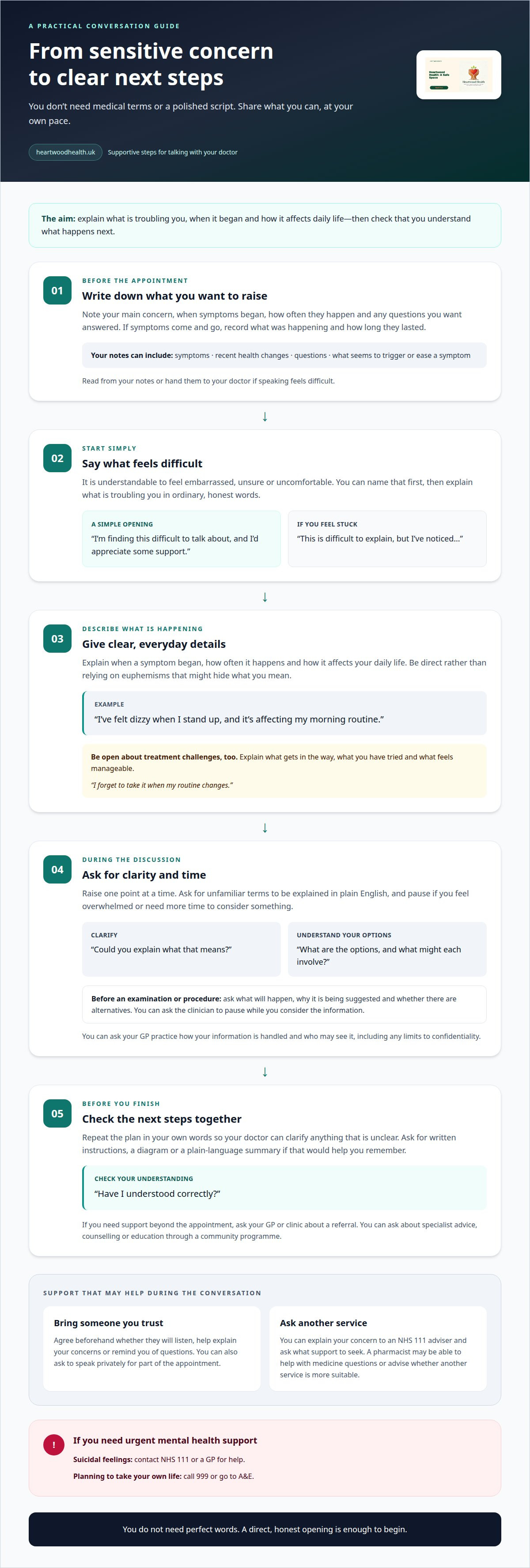
Knowing how to talk about sensitive health concerns with a doctor starts with explaining what is troubling you, when it began and how it affects daily life. You don’t need medical terms or a polished script. Feeling embarrassed or unsure where to begin is understandable. You can say so, write down your main concerns and questions, or bring someone you trust for support. This guide will help you describe symptoms honestly, explain treatment challenges, ask for clearer explanations and request referrals or additional support, so you can take the conversation at your own pace and understand the next steps.
Key Takeaways
- Write down what you want to raise and when the symptoms began to help you explain what’s been happening.
- Tell your doctor if embarrassment or treatment challenges are making the conversation harder; plain, honest words are enough.
- Ask for a referral or additional support if you need help beyond the appointment.
- If you’d value confidential, nurse-led wellbeing support, Heartwood Health offers remote online sessions.
1. Asking for referrals and additional support
You can ask your GP or clinic for a referral when a concern needs more support than one appointment can provide. Be specific about what might help, such as specialist advice, counselling or education through a community programme. For example, say, “Could you refer me to someone who can help me understand these symptoms?” or “Are there local support programmes I could access?” A clear request gives the conversation a practical next step.
If you feel nervous discussing personal topics, tell the clinician at the start: “I’m finding this difficult to talk about, and I’d appreciate some support.” You can bring a trusted friend or family member if that would help you feel more at ease. Agree beforehand whether you want them to listen, help explain your concerns or remind you of questions. You can also ask to speak privately for part of the appointment.
Can you discuss a sensitive concern with an NHS 111 adviser or pharmacist? Yes, you can explain your concern to an NHS 111 adviser and ask what support to seek. You can also raise it with a pharmacist, particularly if your question relates to medicines, and ask whether another service may be more suitable.
For mental health concerns, support from friends and family can matter, but professional help may also be needed. If you’re experiencing suicidal feelings, contact NHS 111 or a GP for help, according to NHS. If you’re planning to take your own life, NHS advises calling 999 or going to A&E. These are urgent routes for immediate support.
When should you seek urgent help for sensitive health symptoms in the UK? If you’re planning to take your own life, call 999 or go to A&E; for suicidal feelings, contact NHS 111 or a GP. For other urgent concerns, tell a healthcare professional clearly what is happening and ask what support to seek now. You don’t need to find perfect words. A direct opening, such as “I’m worried and need help today,” can make your request understood.
2. Being honest about symptoms and treatment challenges
Clear details help your doctor understand what you’re experiencing. Note when each symptom began, how often it happens, and whether anything seems to trigger or ease it. Instead of saying, “I feel unwell,” describe what you notice: “I’ve felt dizzy when I stand up, and it’s affecting my morning routine.” You don’t need medical language. Ordinary, honest words are enough to explain what has changed and how it affects daily life.
A short note can help you remember details during an appointment. Include symptoms, recent health changes and questions you want answered. If a symptom comes and goes, record what was happening at the time and how long it lasted. For sensitive topics, writing things down may feel easier than starting aloud. You can read from your notes or hand them to your doctor if embarrassment makes speaking difficult.
Be open about treatment challenges, too. If you’re finding it hard to follow a plan, explain what gets in the way rather than saying everything is fine. You might say, “I forget to take it when my routine changes,” or “I’m worried about how this affects my work.” Tell your doctor what you’ve tried and what felt manageable. This gives them useful context for discussing other strategies with you.
It’s fine to say you feel embarrassed, unsure or uncomfortable naming a symptom. You could begin, “This is difficult to explain, but I’ve noticed…” Then describe what happens as directly as you can, without euphemisms that might obscure the issue. If you don’t understand a question or explanation, ask for plainer words or repeat back what you’ve understood. This helps keep the conversation clear and focused on what you need.
3. How can you broach sensitive topics with your doctor?
Stress can make talking about health issues harder, especially when the experience is sensitive. Start with a simple opening: “I’m finding this difficult to say, but I’d like to talk about my mental health.” Ask the doctor to explain unfamiliar terms in plain English. If you feel overwhelmed, pause, take a breath and continue when you’re ready.
Make the conversation easier to follow by asking about one point at a time. For example, say, “Could you explain what that means?” or “What are the options, and what might each involve?” If you’ve read something online, bring the page or note its title. NHS information can provide general education, while your doctor can explain how it relates to your own health.
You remain part of decisions about your care. Before agreeing to a sensitive examination or procedure, ask what will happen, why it’s being suggested and whether there are alternatives. Say if you need more time or have a concern. You can ask the clinician to pause while you consider the information. Clear explanations help you make an informed choice that feels right for you.
How does confidentiality work when discussing sensitive health concerns with a UK doctor? Ask your GP practice how your information is handled and who may see it. You can raise this before sharing personal details and ask the doctor to explain any limits that may apply.
Before the appointment ends, repeat the next steps in your own words: “So I’ll try this approach and contact the practice if the problem continues. Have I understood correctly?” This gives the doctor a chance to clarify anything unclear. Ask for written instructions, a diagram or a plain-language summary if that would help, especially if stress makes details harder to remember.
4. Why disclosing sensitive health concerns matters
Sharing a sensitive issue gives your doctor context to understand what is troubling you. It can help them consider possible causes, discuss suitable advice and tailor care to your needs. If you leave out a symptom because it feels uncomfortable, they may not have the full picture. You could start with, “There’s something I’ve been hesitant to mention, but it’s affecting my day-to-day life.”
Being open can also make the appointment more useful. Explain what you’re worried about, what you hope to understand and what feels difficult. If a health issue affects intimacy, sleep or work, say which part of daily life has changed. That detail helps your doctor understand why the concern matters to you, not just the symptom itself.
You don’t have to share everything at once. Prepare one main point, ask for a pause or say you’re not ready to discuss a detail. If a question makes you uncomfortable, ask why the information is relevant before answering. This helps you stay involved while giving the doctor a chance to explain what they need to know.
How can you talk to a child or teenager about a sensitive health concern? Choose a quiet, private moment and use clear, age-appropriate words, such as, “I’ve noticed you seem worried. Would you like to talk?” Listen without interrupting, ask what support they want and give them space if they aren’t ready.
Sharing an experience with someone you trust can make sensitive issues feel less isolating. If you’re supporting a loved one, ask whether they want comfort, practical help or simply someone to listen. A calm conversation can help them feel heard without pressure to explain more than they choose.
Heartwood Health
Heartwood Health offers confidential, nurse-led wellbeing and health support if you’d value a space to talk through concerns and consider what support may help. Turn to this support when a sensitive issue feels difficult to raise or when you want help organising your thoughts before speaking with a doctor. It can sit alongside conversations with healthcare professionals, helping you reflect on your wellbeing and prepare questions in your own words.
This support is not medical diagnosis or treatment and does not replace care from your GP or another healthcare professional. For clinical advice about symptoms, contact your GP or an appropriate NHS service. To talk through wellbeing and health concerns confidentially, contact Heartwood Health.
Take the next step at your own pace
You don’t need to find perfect words before asking for support. Learning how to talk about sensitive health concerns can be gradual, shaped by what feels manageable for you. A first step might be deciding who you’d feel comfortable speaking with and what you hope to gain from the conversation.
If you’d value a supportive space alongside conversations with healthcare professionals, Heartwood Health offers confidential, nurse-led wellbeing and health support. It gives you room to reflect on what matters and consider how you’d like to move forward.
Contact Heartwood Health today to discuss support. Take things one step at a time; your concerns deserve to be heard.
Frequently Asked Questions
How can you broach sensitive topics with your doctor?
If you’re the patient, make the subject clear from the start: “I’d like to discuss something personal.” You can name the area, such as sexual health, mood or bladder changes, without explaining every detail immediately. If the clinician moves on before you feel heard, say, “Could we return to that concern before we finish?” This helps keep the topic on the agenda.
What can you do if you feel nervous, hesitant or vulnerable when discussing tough topics with your healthcare provider?
Choose a first sentence before the appointment, such as, “I’m nervous about talking about this, but I need some help.” Learning how to talk about sensitive health concerns can begin with that simple opening. You might also ask to pause, take a moment to breathe or have someone you trust help you explain. Focus on sharing what feels possible today rather than forcing yourself to cover everything.
Why is it important to talk about sensitive issues?
Speaking up can help your clinician understand the full context of a concern, including how it affects your relationships, work or sleep. Leaving out a change because it feels embarrassing may make it harder to connect with other symptoms or discuss relevant support. Sharing only what you’re ready to share is still useful; you can add detail as the conversation progresses.
How can you prepare to discuss a sensitive health concern with a GP?
Before your GP appointment, decide which issue matters most to address first. Note practical context that may shape the discussion, such as whether symptoms affect work, sleep or caring responsibilities. If you’re worried you’ll lose your words, write an opening sentence on your phone. You can also decide what you want from the appointment, such as an explanation, advice or a follow-up plan.
What words can you use to explain embarrassing symptoms to a doctor?
Use everyday, specific descriptions rather than searching for a medical term. For example, you could say, “I feel pain during sex,” “I leak urine when I cough” or “I’ve noticed blood when I go to the toilet.” If saying it aloud feels difficult, show the doctor a written note. Clear wording explains what is happening without needing to sound polished.
What can you do if you feel judged or dismissed by a healthcare professional?
Tell the clinician what feels unresolved and ask for a clear response: “I’m still worried because this is affecting my daily life. What should happen next?” Ask them to explain their reasoning or discuss what changes would need further attention. If you leave without understanding the plan, contact the practice to clarify it or arrange another conversation about your concern.


