

You don’t need to reach a crisis point to seek online health and wellbeing support. Who can access a service depends on its purpose: some programmes are open to everyone, while others are designed for specific groups.
If you’re unsure where to begin, that’s understandable. Support may be available by phone or online, but the route, eligibility and next steps depend on what you’re looking for, such as help with low mood, work-related strain or general wellbeing.
This guide explains what online and telephone support can involve, how to choose a suitable starting point in the UK, and what workplace support may look like. It also distinguishes general wellbeing guidance from services for employees, health plan members or families seeking support for a child, so you can identify a practical next step without having to work everything out first.
Key Takeaways
- Check who a programme is designed for before applying, as access requirements can vary between services.
- If work is affecting your wellbeing, consider how a Wellness Action Plan could support conversations with your manager.
- Explore appropriate support for low mood, including NHS psychological therapies, which are available in the UK.
- Confidential wellbeing and health support can offer a place to talk through your concerns and consider next steps.
Access requirements for online programmes
Access depends on a programme’s purpose, audience and format. Some resources are open to everyone, while others serve a defined group. Before starting, read the eligibility details and check whether the programme is self-guided, telephone-based or led by a practitioner. This helps you choose an option that fits your needs.
The NHS Inform wellbeing resource describes five areas that may support general wellbeing: connecting, being active, learning, giving to others and being mindful. These can point you towards relevant activities rather than a formal course. For example, someone experiencing anxiety may find a mindfulness activity useful, while another person may prefer connecting with others.
Some online programmes have specific eligibility criteria. Health and care staff and volunteers can access between one and four confidential virtual coaching sessions, each lasting one hour. This offer is intended for those groups, not the general public. Read the programme’s criteria before planning to take part.
Private online therapy and counselling differ from general wellbeing resources. This section focuses on access to programmes. When looking for a therapist or counsellor in the UK, check their training, relevant experience and professional registration or membership. Make sure their stated scope fits the support you need, and read how sessions and confidentiality are handled.
Online sessions can make support easier to access, but they have limits: a video or phone conversation cannot provide every kind of in-person assessment. General health and wellbeing support is not a medical diagnosis or treatment. If you need help understanding a health concern, choose a service whose role fits that need. A stable connection, private space and suitable device can also make an online session more comfortable.
Burnout support at work
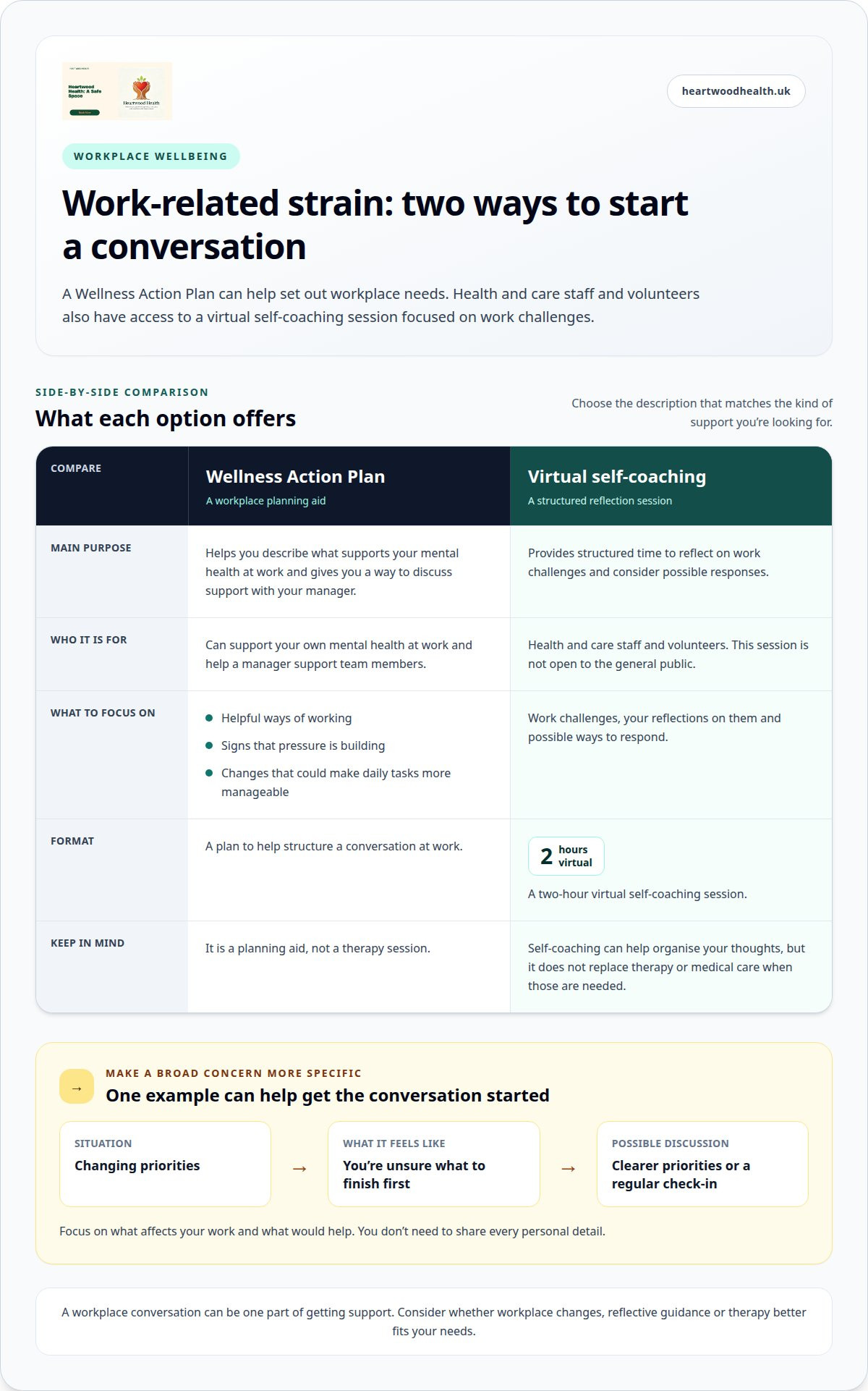
Work-related strain can affect your mental health, energy and relationships. Support may start with noticing what has changed, then identifying practical steps at work. For example, if you’re struggling to switch off after work, note when it happens and what makes it harder. A specific example can make it easier to start a conversation with your manager.
A Wellness Action Plan can help structure those conversations. It can support your own mental health at work and help your manager support team members. Use it to describe helpful ways of working, signs that pressure is building and changes that could make daily tasks more manageable. It’s a planning aid, not a therapy session.
Health and care staff and volunteers can attend a two-hour virtual self-coaching session. It provides structured time to reflect on work challenges and consider possible responses. The session is intended for that staff group, not general access. Self-coaching can help organise your thoughts, but it does not replace therapy or medical care when those are needed.
- Wellness Action Plan: useful for setting out your needs and discussing workplace support with your manager.
- Virtual self-coaching session: designed for health and care staff and volunteers to reflect on work challenges.
Turn a broad concern into one clear example. For instance, changing priorities may leave you unsure what to finish first. That gives your manager something specific to discuss, such as clearer priorities or a regular check-in. Focus on what affects your work and what would help; you don’t need to share every personal detail.
Emotional strain can have several causes, so a workplace conversation may be just one part of getting support. When considering online health and wellbeing support, look for a service that clearly explains its role. You can then decide whether reflective guidance, workplace changes or therapy better fits your needs.
A Wellness Action Plan supports someone’s own mental health at work and helps a manager support team members. Health and care staff and volunteers can also use the two-hour virtual self-coaching session to reflect on work challenges.
Eligibility for online or telephone support
Access depends on a service’s purpose and intended audience. A public information resource may be open to everyone, while a structured service may have specific eligibility criteria. Before arranging support, read who it is for, how to access it and whether a referral is involved. These details can help you find a route that suits your situation.
Online therapy and NHS support differ in how they’re accessed and delivered. Online sessions offer remote contact, while face-to-face therapy lets you meet in person. Consider which format feels comfortable and what kind of support you need. Eligibility rules and available arrangements also affect which option may suit you.
Online and telephone support can include therapy, workplace wellbeing support, health information and general wellbeing guidance. An employee assistance programme (EAP) provides workplace wellbeing support. Eligibility is usually linked to your employment or workplace arrangements, so check the relevant programme information to see who can use it.
- Online therapy: structured support delivered remotely, subject to the service’s access criteria.
- Telephone support: a way to speak with a service without using video.
- Wellbeing information: self-guided material for learning about everyday wellbeing.
- EAP: workplace wellbeing support for eligible employees.
Online wellbeing support may include public information and self-guided resources. These can help you explore practical ideas independently, while support from a practitioner has its own access route. Read the eligibility details to see whether you can use a resource directly or need to take another step.
If you need urgent mental health help, contact an urgent service by telephone or in person. A self-guided website cannot provide an emergency response. Choose support that matches the urgency of your need rather than relying on an online wellbeing resource for immediate help.
Low mood
If you’re feeling low, start by noticing what has changed in your day. You might be putting off a task, avoiding a conversation or finding it harder to settle at night. You don’t need to label the cause. A specific example can help you explain what you’re experiencing if you decide to talk with someone.
A brief mood note may help you spot patterns. Write down the situation, how you felt and what was happening around you. For instance, note whether a difficult workday or unsettled evening seemed connected with a change in your mood. Keep notes brief, and bring them to a conversation if they help explain what’s been going on.
Choose one small, manageable action rather than trying to change everything at once. You could plan a meal, step outside for a short while or reply to one message. Notice how you feel afterwards. It isn’t a test, and you don’t have to feel better immediately for the effort to matter.
A few practical tools can make it easier to prepare for support:
- Mood notes: record situations and feelings to help describe your experience.
- A daily prompt: use a reminder to pause and notice what you need.
- Appointment notes: list the main concern and one question you want to discuss.
- A trusted person: practise saying what feels difficult before a conversation with a professional.
If low mood is making everyday tasks hard to manage, consider speaking with a health professional. You could begin by saying, “I’ve been feeling different lately, and it’s affecting my day.” Share the examples that feel relevant and explain what support you’d like to explore. Take the conversation one step at a time.
Heartwood Health: Confidential Wellbeing and Health Support
Heartwood Health offers Confidential wellbeing and health support and Nurse-led wellbeing support if you want to talk through a concern. It may be a helpful next step when you’re looking for clear guidance, health education or support to consider possible ways forward. Share what’s troubling you and discuss the questions you’d like help with at a manageable pace.
This support does not provide medical diagnosis or treatment, prescribe medication or replace urgent care. If you need a diagnosis, treatment or emergency help, seek the appropriate health service. For concerns suited to a calm conversation and practical wellbeing guidance, Confidential wellbeing and health support may help you consider what to do next.
If you’d like to talk about your situation, contact Heartwood Health.
Take a gentle next step
When your concerns feel difficult to organise, a small first step is enough. Consider what you’d most like help with: making sense of a change, finding practical ways forward or talking it through. Share only what feels comfortable, and take time to decide what suits you.
Online health and wellbeing support can help you consider possible next steps. Think about whether you’d prefer phone or online sessions and what would make the conversation feel manageable. Noting one question beforehand can make it easier to begin.
If you’re ready to explore support, contact Heartwood Health for support. You can take the next step at your own pace.
Frequently asked questions
Is online health and wellbeing support confidential and secure in the UK?
Heartwood Health describes its support as confidential and is ICO registered. Confidentiality and digital security are related but different: confidentiality concerns how personal information is handled, while security concerns protecting it from unauthorised access. Before sharing sensitive details with an online service, read its privacy information and, where possible, choose a private space and device.


