

Support is easier to use when it starts with listening. Nurse-led wellbeing support gives you a confidential space to talk about physical health, emotional wellbeing and pressures affecting daily life, then consider practical next steps at a manageable pace. Health concerns can affect the whole family, and it can be hard to work out what to raise with a GP, when specialist input may help or how to support someone you love. A nurse can help you organise those conversations without replacing your usual healthcare team. This article explains what nurse-led support involves, how nurses can help coordinate communication with GPs and specialists, and how compassionate conversations can help individuals and families feel heard, understand their options and take an active part in decisions. Wellbeing support is not medical diagnosis or treatment.
Key Takeaways
- Understand how a personalised care plan can reflect your needs and goals, with regular reviews to keep support relevant.
- See how nurses can help coordinate communication between you, your GP and other professionals involved in your care.
- Explore ways compassionate support can help you and your family talk through the emotional effects of health concerns.
- Find out what UK nurse-led wellbeing programmes may involve and when confidential support from Heartwood Health could be a helpful next step.
What is nurse-led care?
Nurse-led care focuses on your health needs, circumstances and goals. It can include personalised plans, communication and regular reviews.
Person-centred support and communication
A person-centred conversation considers how physical health, mental wellbeing and daily circumstances connect. A nurse can help you identify what matters, recognise your strengths and agree practical steps. A personalised plan can record your priorities and agreed actions. Reviews give you a chance to discuss progress, changing needs and whether the plan remains useful. Look for communication that makes room for your choices and questions.
Services and comparisons
Support may include health conversations, wellbeing guidance and help setting personal goals. A GP appointment can address clinical concerns, while wellbeing conversations focus on understanding your situation and planning manageable changes. Counselling focuses on emotional difficulties, and health coaching supports goals and behaviour change. These approaches can complement one another, but they serve different purposes.
NHS access depends on the local service and its referral route. You may be directed through a GP or community health service, and criteria vary. To find support, look for nurse-led services through NHS or community health pathways. For a referral, contact the relevant service or discuss your needs with your GP.
Nurse qualifications and registration
For nursing care in the UK, check that the practitioner is a registered nurse on the Nursing and Midwifery Council (NMC) register. The NMC’s future nurse standards, published in May 2018, include promoting health and preventing ill health as one of seven platforms. Ask how the nurse’s experience relates to the support offered, and what falls outside their role.
Evidence, risks and safeguarding
Consider effectiveness in relation to your agreed goals, such as feeling better informed or able to take practical steps. Regular reviews can help you and the nurse reflect on progress, but they don’t establish a medical diagnosis. Wellbeing support isn’t a substitute for assessment or treatment when clinical care is needed. Before sharing sensitive information, discuss confidentiality and safeguarding, including how concerns about someone’s safety are handled. If a concern needs clinical attention, contact your GP or appropriate health service.
Coordination with GPs and specialists
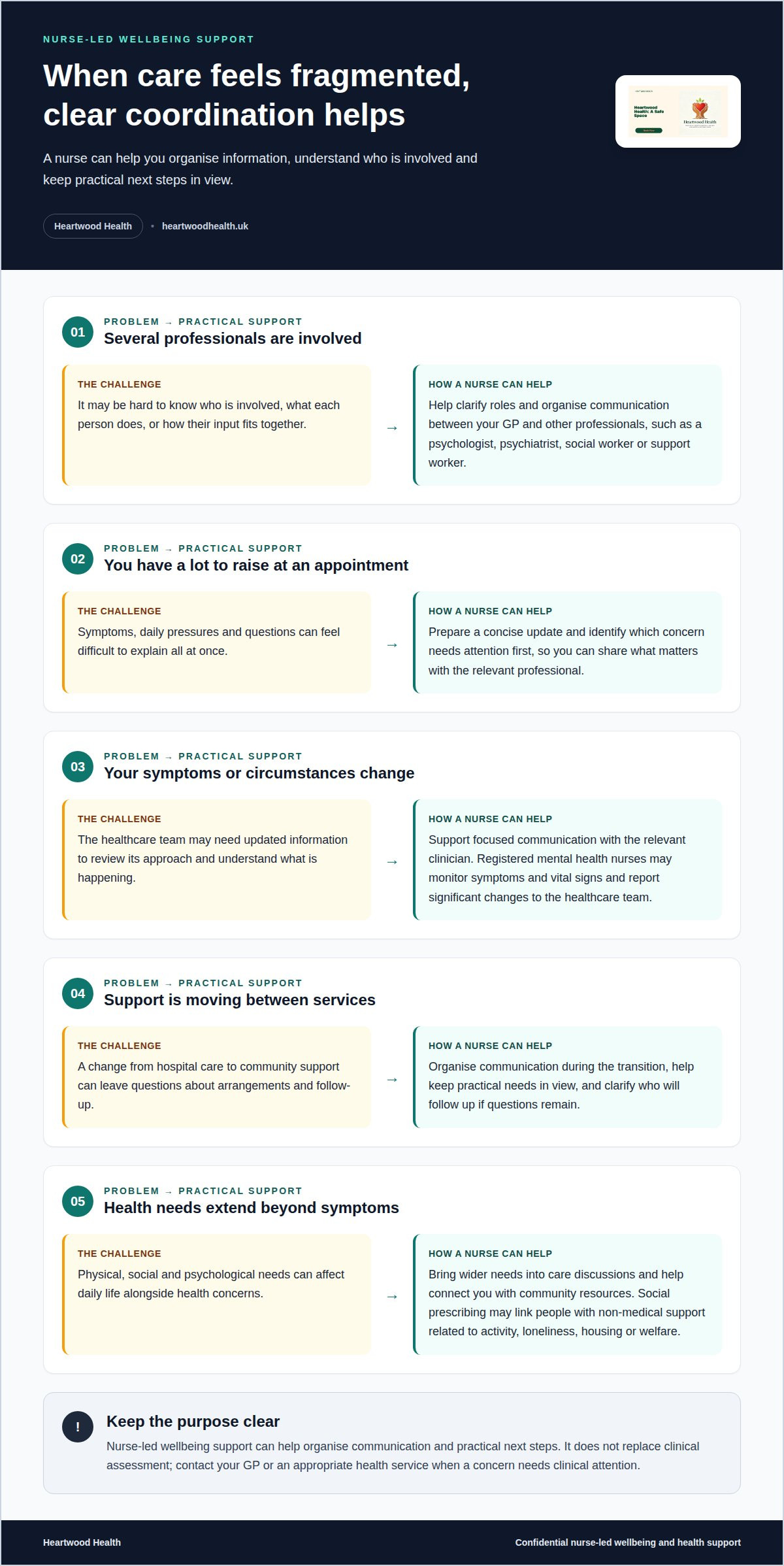
Nursing support can help keep the people involved in your care informed. Registered mental health nurses may monitor symptoms and vital signs, then report significant changes to the healthcare team. For example, they can share a change in symptoms with the relevant clinician so it can be considered in the context of your wider health. This communication supports joined-up care; it doesn’t replace clinical assessment.
Your needs may involve several professionals, such as a GP, psychologist, psychiatrist, social worker, allied health professional or support worker. Each can contribute a different perspective. A nurse can help organise communication between them, clarify who is involved and support transitions between healthcare settings. This can be particularly useful when care moves from a hospital service to community support.
Clear information makes coordination more practical. A nurse can help you prepare a concise update about symptoms, daily challenges or questions for an appointment, and identify which concern needs attention first. For instance, you might want to discuss a new symptom with your GP while also seeking help with the stress it causes. The clinical concern and its emotional impact may call for different kinds of support.
Coordination can also connect health conversations with community resources. Social prescribing links people in primary or secondary care with non-medical support for physical, social and psychological needs. This might include community options related to physical activity, loneliness, housing or welfare. A nurse can help bring these needs into wider care discussions, so support reflects more than symptoms alone.
Useful coordination has a clear purpose: the right people understand relevant information, and you know what happens next. Ask for plain explanations of each professional’s role and how their input relates to your care. If your needs or circumstances change, tell the healthcare team. Updated information can help the team review its approach and keep communication focused on what matters to you.
Nurses in care coordination initiatives help organise care and resources during transitions between healthcare settings. This can support continuity when responsibilities shift between services, while keeping practical needs in view. Ask which arrangements are being made and who will follow up if questions remain after a transition.
Emotional support for individuals and families
A health concern can affect confidence, relationships and routines, as well as physical wellbeing. A nurse-led conversation gives you room to describe what feels hardest without reducing your experience to a symptom. Compassionate listening can help clarify whether worry, tiredness or changing responsibilities are affecting daily life. For example, you might discuss how a new care routine is disrupting sleep or making work feel harder.
Families can be affected too. A relative may be unsure how to help, while the person receiving support may want more independence. A nurse can help everyone explain their concerns and agree practical ways to communicate. You might identify one helpful task for a family member, such as accompanying someone to an appointment, and one decision the person wants to make themselves. This keeps their preferences central.
Emotional support can turn a difficult conversation into a manageable next step. You and the nurse might identify a specific source of stress, consider what has helped before, then choose an action to try. That could mean planning a calmer conversation with a relative or making time for a restorative activity. Advice alone may not be enough when social or economic pressures make change difficult, so support should take those circumstances into account.
Care can happen in different settings, including community services and a person’s home. Wherever it takes place, be clear about what support is for and what it cannot replace. A wellbeing conversation can help you feel heard and prepare questions for your healthcare team, but it isn’t medical diagnosis or treatment. If family members are involved, discuss who you want included and what you feel comfortable sharing.
For families supporting someone through recovery, involving relatives in agreed parts of care can help them understand what the person needs. Keep the person’s wishes in view, and revisit arrangements when circumstances change. A nurse can help you recognise emotional strain early, talk through practical pressures and decide which concern needs attention first.
Across the UK, the four countries have individual public health strategies with objectives similar to the future nurse standards. Nurse-led care at home can include family in recovery and care. Registered nurses can create individualised care plans that reflect people’s health needs and goals.
What services do UK nurse-led wellbeing programmes offer?
UK nurse-led wellbeing programmes can combine practical health conversations with support for personal goals. A nurse might ask what you want to change, what makes it difficult and what resources could help. This connects health improvement with everyday life rather than offering advice in isolation. For example, a conversation about becoming more active can explore your routine, confidence and barriers before you choose a manageable first step.
Brief conversations, health coaching and motivational interviewing can help you explore choices and build motivation. A nurse might ask open questions, listen to what matters to you, then help you set a realistic goal. You could decide to take a short walk during lunch breaks or prepare questions about a health concern for an appointment. The focus is on informed choices and practical action, not diagnosis or treatment.
Some programmes bring health conversations into community settings, including clinics in barbers, betting shops and bingo halls. Familiar places can make it easier to start a conversation about wellbeing. A nurse might discuss a health concern, share relevant information and help someone consider a next step. The setting changes, but the aim remains a respectful exchange suited to the person’s needs.
The right kind of support depends on your priorities. You might want help understanding health information, setting a goal or finding ways to make a change sustainable. Social and economic circumstances can affect what feels possible, so a useful conversation takes those pressures into account. Support should also be clear about its limits: wellbeing guidance doesn’t replace clinical assessment when you have a medical concern.
If a confidential conversation about your wellbeing feels like a helpful next step, explore nurse-led wellbeing support.
Heartwood Health: Confidential nurse-led wellbeing & health support
Heartwood Health offers confidential, nurse-led wellbeing and health support when you want space to discuss your wellbeing and consider practical next steps. It can complement your existing support, including an employee assistance programme, without replacing your GP or specialist team.
In-person support is available in Nottingham, alongside remote online sessions, so you can choose a setting that feels comfortable. Heartwood Health is registered with the Information Commissioner’s Office (ICO). The service supports wellbeing conversations; it does not provide medical diagnosis or treatment.
If you’d like a confidential conversation about whether this support suits your needs, contact Heartwood Health.
Take a manageable next step
You don’t need to have every concern neatly explained before asking for support. Start with what feels most pressing, whether that’s a change in your wellbeing, a family worry or uncertainty about what to discuss with your healthcare team. From there, you can consider what kind of support feels appropriate and what you’d like to work towards.
Heartwood Health offers confidential, nurse-led wellbeing and health support. Its approach gives you a thoughtful space to talk through personal concerns and consider practical next steps alongside the care you already receive. Nurse-led wellbeing support may suit you when you want a confidential conversation focused on your wellbeing, rather than medical diagnosis or treatment.
Heartwood Health’s team brings nurse-led expertise to this supportive approach. If you feel ready to explore that option, you’re welcome to contact Heartwood Health. Taking the first step can be simple: share what’s on your mind, and begin from there.
Frequently Asked Questions
What is nurse-led wellbeing support?
Nurse-led wellbeing support offers confidential conversations with nurses about health and wellbeing concerns, helping you understand information and identify practical next steps. For example, you could discuss how stress is affecting your daily routine and plan what you’d like to raise with your healthcare team. This support can help you feel more prepared to make informed choices, but it isn’t medical diagnosis or treatment.


