

If you want to book wellbeing support, clear, approachable information can help you decide what to do next. Reading Well offers books on common issues and mental health conditions, selected with input from health professionals, people with lived experience, relatives and carers. The UK Health Security Agency’s wellbeing collection covers physical, emotional and mental wellbeing.
Loneliness can be difficult to talk about, but you don’t have to dismiss what you’re experiencing or work through it alone. This guide explains where to find mental health information, how books and other resources may help, and how Confidential wellbeing and health support and Nurse-led wellbeing support can give you space to talk things through.
Key Takeaways
- Explore trusted book collections for practical reading on mental health, wellbeing and loneliness.
- Understand how a wellbeing support service differs from medical diagnosis or treatment, and what you can discuss with a nurse.
- Learn what to consider when finding support in the UK, including the kind of guidance you’re looking for.
- Find out how eligibility can depend on the service and your circumstances, and where Confidential wellbeing and health support or Nurse-led wellbeing support may fit.
Mental health advice and support
Books can offer clear explanations, practical ideas and reassurance when you’re trying to understand a mental health concern. Reading Well is a research-supported scheme endorsed by health professionals. Its books cover common issues and mental health conditions, helping readers understand and manage their wellbeing. The titles are selected with health professionals, people with lived experience, relatives and carers, bringing different perspectives to the recommendations.
Consider these resources for different needs:
- Reading Well: books about common mental health concerns and conditions, with information to help you make sense of your experience.
- UK Health Security Agency Wellbeing collection: books chosen to support physical, emotional and mental wellbeing. It includes titles from the Reading Agency’s 2016 and 2018 Mood Boosting Books lists.
- BookTrust: recommendations about calm and mindfulness for children aged 4 to 9 years, which may help parents and carers find age-relevant reading.
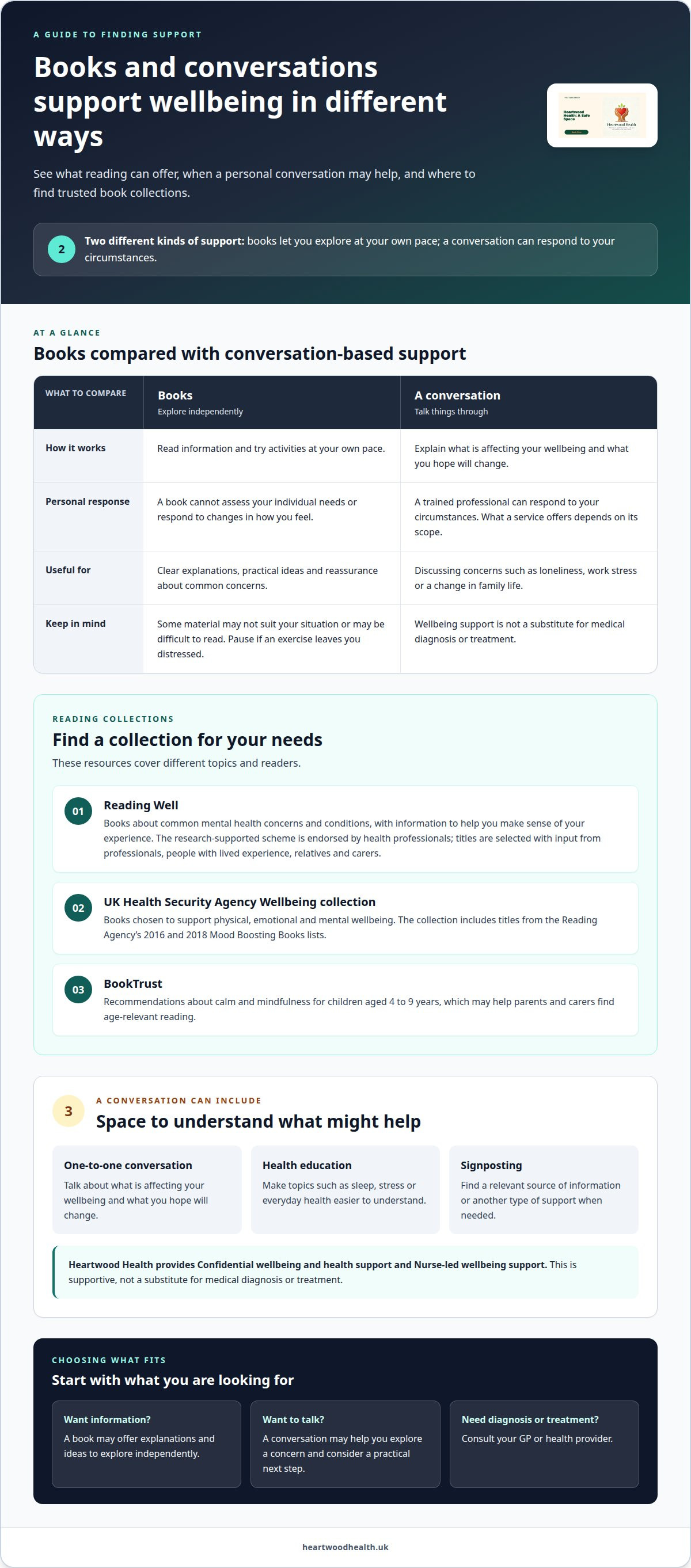
Books and counselling offer different kinds of support. Books provide information and activities to explore independently, while counselling involves a conversation with a trained professional that can respond to your circumstances. If you book wellbeing support, consider whether you’re looking for reading recommendations, a chance to talk or more tailored support.
Book-based support has limits. A book can’t assess your individual needs, respond to changes in how you feel or offer a personal conversation. Some material may not suit your situation or may be difficult to read. Use books as one source of information, not as a replacement for professional support when you need individual guidance.
A simple reading practice can help you reflect. You might record something that brought you happiness or write down what you feel grateful for. These activities have been shown to support positive emotions, health, coping with adversity and relationships. Choose an approach that feels manageable, and pause if a book or exercise leaves you distressed.
Noticing moments of happiness and expressing gratitude are described as supporting positive emotions, health, coping with adversity and relationships. Try a small, comfortable approach, such as writing a brief note or pausing to reflect. Keep it optional and manageable, rather than making it another expectation.
What does a book wellbeing support service provide?
Books and wellbeing support services help in different ways. Books offer information you can read at your own pace. A support service gives you space to discuss a concern, such as loneliness, work stress or a change in family life, and consider a practical next step. The support available depends on the service and its scope.
Common support tools have distinct purposes:
- A one-to-one conversation: gives you space to explain what is affecting your wellbeing and what you hope will change.
- Health education: helps make topics such as sleep, stress or everyday health easier to understand.
- Signposting: can point you towards a suitable source of information or another type of support when your concern needs a different response.
You might, for example, describe feeling isolated after moving home or struggling to balance caring responsibilities with work. A conversation can help you identify what feels hardest and what guidance might be useful. Before sharing personal details, you can ask how confidentiality works and what the service can discuss.
Before booking, identify why you want support. You might want to understand a health topic, talk through a wellbeing concern or find a relevant resource. You don’t need a formal label for what you’re experiencing. A simple description, such as “I’ve felt disconnected since my routine changed”, gives the conversation a clear starting point.
Wellbeing support is not a substitute for medical diagnosis or treatment. A service focused on wellbeing can offer information and supportive discussion within its scope, but it cannot replace care for a medical condition. If you need diagnosis or treatment, consult your GP or health provider. Understanding this distinction helps you choose support that matches your needs and expectations.
How can a provider help you book wellbeing support in the UK?
Start by matching the support to your main concern. You may want to talk about loneliness, understand a health topic or find practical wellbeing guidance. This helps you explain what you’re looking for and decide whether a service is a good fit.
Before booking, look for clear information about the provider’s approach. Find out who delivers the support, which topics you can discuss and how confidentiality is handled. Heartwood Health provides Confidential wellbeing and health support and Nurse-led wellbeing support. It is supportive, not a substitute for medical diagnosis or treatment.
Use the booking route to ask focused questions about the support, confidentiality and what happens next. A callback request can be a straightforward way to start a conversation. You might ask:
- What happens during the first conversation?
- Can I discuss loneliness, stress or a family wellbeing concern?
- How is confidential information handled?
- What should I do if I need medical diagnosis or treatment?
Keep your explanation simple. “I’ve been feeling isolated since my routine changed” gives a provider a clear starting point. You can also mention whether you prefer to speak by phone or need support that works around caring responsibilities. These details help shape a conversation around your circumstances.
Booking is only one part of finding a suitable fit. Notice whether the service explains its role in plain language, listens to your concern and sets realistic expectations. A wellbeing conversation can help you explore options, while a request for diagnosis needs medical care. Clear boundaries make it easier to choose the right kind of support.
If you’re unsure where to begin, describe your concern and ask what the first step involves. A clear explanation of the booking process, confidentiality and service scope can help you decide whether to proceed. Take time to consider the information before making a decision.
What are the eligibility criteria for book wellbeing support?
Eligibility depends on the service you’re considering. A wellbeing provider sets its own access criteria, which can relate to location, membership, age or the type of support requested. For example, a service for members may require an active membership, while another may accept direct enquiries. Read the provider’s eligibility information before starting an application.
Your reason for seeking support also matters when deciding whether a service is suitable. A conversation about loneliness, stress or understanding a health topic may fit wellbeing support. A request for diagnosis or treatment needs medical care. Clear service boundaries help match your concern with the right support.
Useful points to establish before booking include:
- Location: whether the service supports people where you live, including if you need remote access.
- Membership: whether access is open to everyone or linked to a health plan or membership.
- Age: whether the service supports adults, children or families, and whether a parent or carer should be involved.
- Type of help: whether the service covers your concern, such as wellbeing guidance or health education.
If you’re seeking support for a child, explain their age and what you’d like to discuss so the service can clarify whether it is appropriate and who should take part. If you’re booking for yourself, describe your concern in everyday language rather than trying to choose a clinical label.
An introductory conversation can help clarify access and expectations before you commit. Use it to explain your circumstances, ask how the service works and understand any membership requirements. A provider’s answers should make the next step clear. If your needs fall outside its scope, ask what kind of service is more appropriate, rather than expecting wellbeing support to replace medical care.
Whether a service is suitable is not a measure of how serious your concern is. It depends on the service’s scope and whether it fits what you need. Explaining your concern clearly can help establish that fit.
Heartwood Health: Confidential wellbeing and health support
Heartwood Health offers Confidential wellbeing and health support if you’d like to talk through a concern, understand a health topic or consider a practical next step. A conversation can complement reading and other wellbeing information, with space to discuss what feels relevant to you.
If you’re unsure whether this support suits your needs, Heartwood Health offers a free 10-minute introductory call. You can use it to ask how the service works and explain what you’re hoping to discuss. The support provides guidance and wellbeing conversations, not medical diagnosis or treatment.
You don’t need to prepare a detailed account. Starting with something simple, such as feeling lonely or finding a health concern difficult to manage, can guide the conversation. Contact Heartwood Health to ask a question or discuss the next step in accessing Nurse-led wellbeing support.
Choose a next step that feels manageable
You don’t need a complete explanation before seeking support. If loneliness or a mental health concern has been weighing on you, start with what feels easiest to express. Deciding to book wellbeing support can simply mean asking for a conversation, without needing to predict what will follow.
Reading can help you reflect, while a conversation gives you space to talk about what matters to you. Heartwood Health offers Confidential wellbeing and health support, shaped by the team’s Nurse-led wellbeing support expertise. If you’re thinking about whether to book wellbeing support, consider what you’d like from a conversation and what feels comfortable to share.
You can take time to decide what feels right. If you’d like to ask a question or explore support, contact Heartwood Health. You can book wellbeing support in a way that feels manageable for you. A small step towards talking things through can be worthwhile, and you can begin in your own way.
Frequently Asked Questions
How can I access support or help someone else get started?
To book wellbeing support, contact Heartwood Health and explain the kind of guidance you’re seeking. If you’re helping someone else, ask whether they’d like support making contact, then let them describe their own needs. This keeps their choices at the centre. They can also request a callback at a time that suits them.


